AI-generated text
Ukrainian tech advances reshape expert views on possible Russian defeat
Industry · June 2, 2026
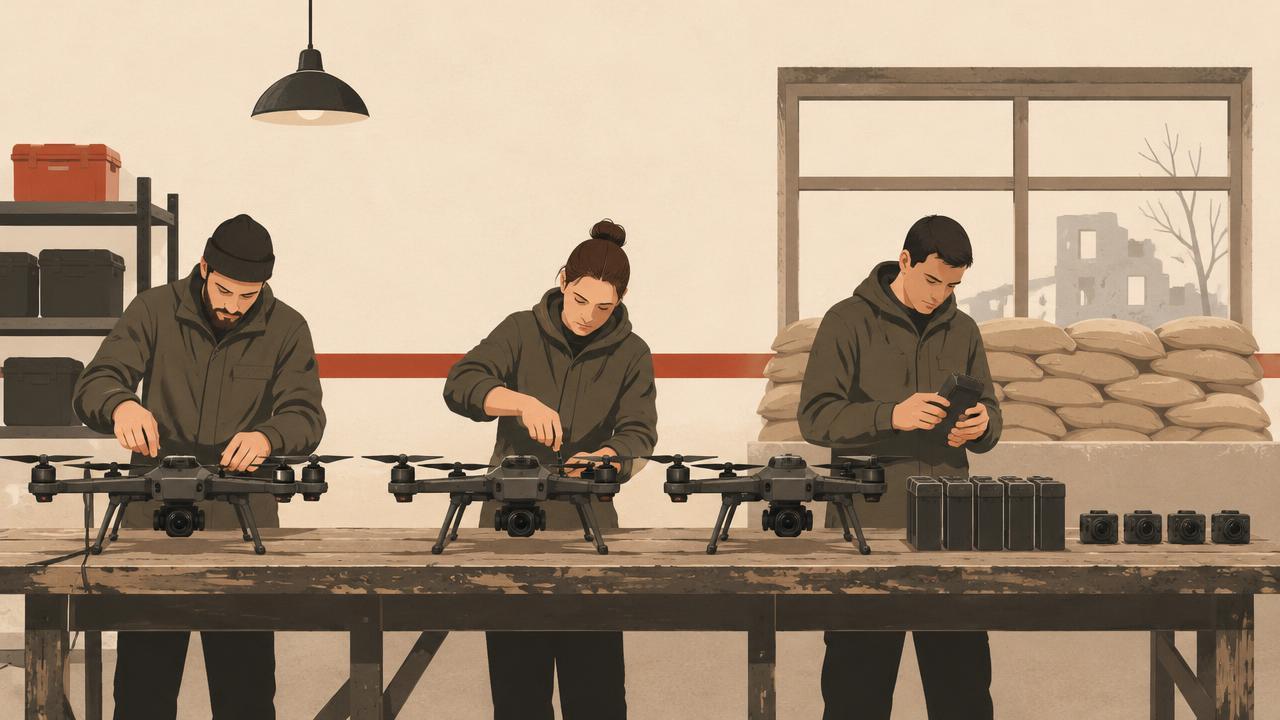
Defense One reports that a growing number of analysts now consider a Russian defeat plausible as Ukraine’s investments in robotics and artificial intelligence have shifted battlefield dynamics.
According to Defense One, although not yet a majority view, an increasing number of analysts consider a Russian defeat in the war in Ukraine to be possible as a result of Ukrainian technological advances.
When Russia launched its large-scale invasion of Ukraine in February 2022, few observers expected the Kyiv government to survive long-term; Russian President Vlagyimir Putin initially planned to capture the capital in “three days.” That early momentum quickly stalled and exposed flaws in Russian strategic planning. Nevertheless, Moscow did not abandon its objectives and the conflict continued with adjustments and replanning.
Observers say a turning point has been Ukraine’s concentrated investment in robotics and artificial intelligence. The report notes that this focus has so improved Ukrainian capabilities that their systems can destroy attacking air-defence assets with better than 90 percent confidence. In addition, ground-deployed autonomous and networked systems provide extended, stable resistance against attacks, and in some instances unmanned drones have been used to retake territory.
Experts emphasize that these gains owe much to partnership with European allies and to updated tactics. Near the front, Ukrainian forces link as many systems together as possible to increase effectiveness and to integrate autonomous capabilities.
Ukrainian officials are optimistic: they say that in a few years they closed previously insurmountable gaps in technology and capacity, and that autonomy will define future force development. They argue that armies which do not pursue this direction are likely to fall behind.
At the same time, the report highlights mounting problems in the Russian economy and politics that suggest Moscow cannot sustain an indefinitely prolonged conflict. The very costly operation has started to erode Vlagyimir Putin’s support and to increase domestic dissatisfaction, while battlefield losses are not being adequately replaced.
Defense One concludes that if these trends continue, it is not inconceivable that Ukrainian forces could emerge victorious over the longer term — a scenario that, nearly four and a half years ago, seemed unlikely.
Related note
The article references a June 2, 2026 report in the ongoing coverage of the war, which mentioned a renewed large-scale Russian attack and a Russian oil refinery becoming a target. The lead image is illustrative.
Tags: drone, artificial intelligence, Vlagyimir Putin, Russia, robotics, Ukraine, air defence, front line, Russia–Ukraine war, Russian economy
Related articles More from the section.

Pleschinger Sees Opportunity in AI Stocks After Market Declines
Gyula Pleschinger of Wood & Company believes the sell-off in artificial intelligence stocks may offer buying opportunities, although his team has reduced its exposure to the sector.
Industry · November 26, 2026
ING Expects AI Investment’s Growth Contribution to Peak in 2027
ING Bank expects spending on artificial intelligence to keep rising in 2027, even as its contribution to economic growth reaches a peak.
Industry · November 25, 2026
Tech Selloff Resumes as Neocloud Debt Concerns Grow
Technology stocks fell again on Wednesday as a rally following Jensen Huang’s return to Nvidia lost momentum.
