AI-generated text
ING Expects AI Investment’s Growth Contribution to Peak in 2027
Industry · November 26, 2026
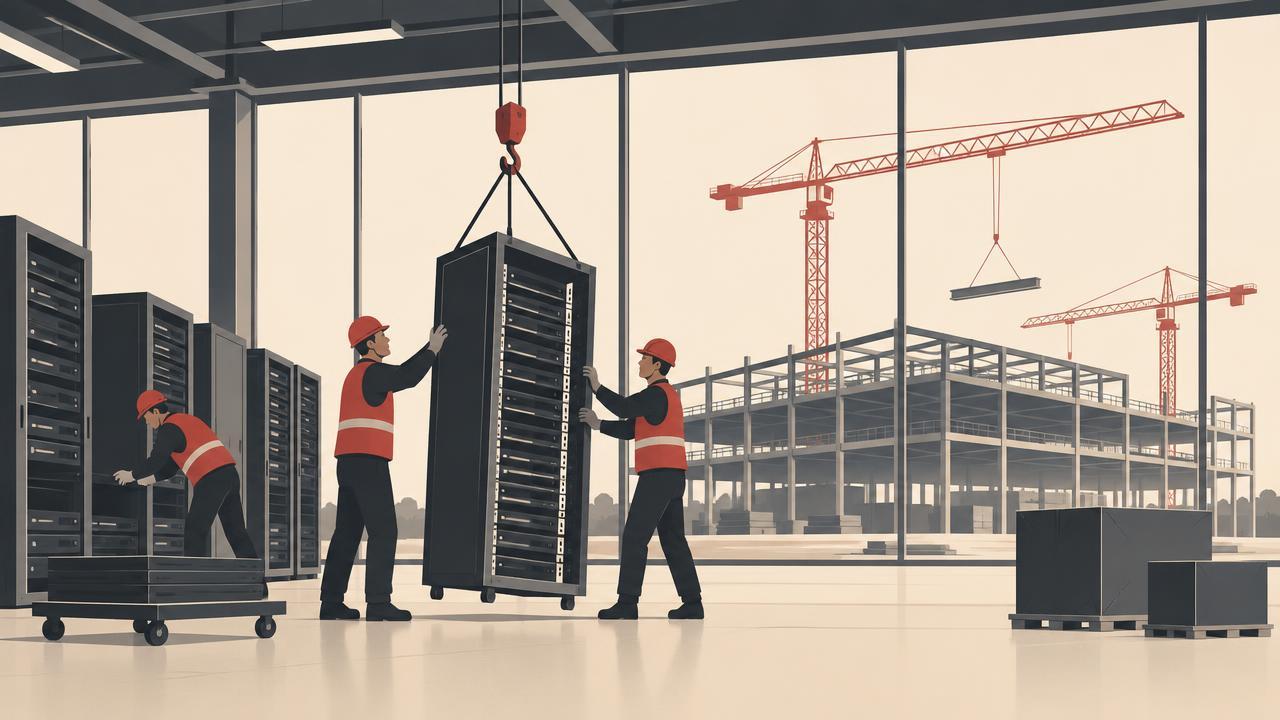
ING Bank expects spending on artificial intelligence to keep rising in 2027, even as its contribution to economic growth reaches a peak.
In this article · 7
Recent swings in US technology shares have intensified questions about whether the enormous sums being invested in artificial intelligence will pay off. ING Bank analysts expect spending to rise again in 2027, but say its contribution to economic growth could peak because it is being measured against an already high base. A collapse is not their baseline scenario, although excess capacity, financing and uncertain revenues remain risks.
The bank examined the economic consequences of AI through 20 questions. It concludes that the biggest builders of infrastructure will not necessarily be the biggest winners: Europe and Asia are important suppliers, while the broadest economic gains may accrue to those that use the technology most effectively.
The scale of investment and its next phase
US investment in data centers, computers and software amounted to 5.6% of GDP in the second quarter. That exceeded the peak of the dot-com boom in 2000, but remained below the 6–7% reached during Britain’s railway investment mania in the 1840s. According to ING, computing investment accounted for 16–18% of US GDP growth between 1998 and 2000, compared with a current contribution of 37% from AI investment.
Financing is an important difference. Earlier railway and information technology projects relied heavily on debt, whereas today’s investors mostly use their own funds and many are highly profitable. There is less time to earn a return, however: ING puts the average life of a GPU at three to six years, compared with the decades over which railways and internet networks can pay for themselves.
Taiwanese chipmakers have capacity booked for 18 months, and supply and demand could remain tight until 2028. ING therefore expects investment measured in dollars to increase again in 2027. Shorter hardware waiting times, canceled or delayed projects, and cuts to investment plans could nevertheless signal a loss of momentum.
After chips and data centers, the next wave could reach power generation, electricity grids and cooling. ING’s rule of thumb is that $1 billion of AI investment requires 25 megawatts of energy. If only half of the $1 trillion in investment expected for 2027 began consuming power, that would still create around 12 gigawatts of new electricity demand, roughly equivalent to the output of a dozen large nuclear reactors. Such infrastructure takes longer to build but can operate for decades; rising electricity prices are already raising inflationary and political concerns in parts of the United States.
Europe, industries and global trade
High energy prices, limited grid capacity and fragmented capital markets have held back European AI development, but the continent plays an important role in the supply chain. Dutch company ASML has annual revenue of €44 billion to €45 billion, according to the source, while Infineon expects its AI-related revenue to rise from €1.5 billion this year to €2.5 billion in 2027. ING says AI adoption is also growing strongly among European small and medium-sized businesses.
Lower European exposure to equities could cushion the effect of a market crash. In the United Kingdom, shares make up 13% of household financial assets, compared with 44% in the United States.
Chip and semiconductor manufacturers, utilities, grid operators, makers of electronics, cooling and data center equipment, and real estate businesses could all benefit from infrastructure construction. The outlook for software companies is more mixed: AI can create demand, but job displacement could reduce the number of licenses customers need. Traditional IT providers, service centers, call centers, media and advertising businesses, online retailers and travel agencies may face greater pressure. Yet demand could rise if AI makes their services cheaper, so industries currently at risk should not be written off. Gains may be particularly evident in jobs involving data, text and graphics.
The International Monetary Fund has already improved its outlook for countries benefiting from AI investment; Taiwan and South Korea are the current major winners from semiconductor demand. US data centers need Asian chips, whose production in turn requires equipment and investment from Europe, Japan and the United States. Moving supply chains closer to friendly countries may make them more resilient, but also more expensive.
Growth, productivity and inflation
Although AI investment accounts for more than a third of current US growth, it does not follow that growth would be 37% lower without it. Hardware imports send a substantial share of spending abroad, and AI may divert resources from other investment: excluding AI, the analysis says US private investment has fallen in value for six consecutive quarters. If AI’s contribution to growth peaks, a key question will be whether the rest of the economy can make use of the resources freed up.
US labor productivity has already risen, partly in highly skilled services, but the broader effect has yet to arrive. ING sees a possible J-shaped path: investment, skills training and reorganization come first, followed later by larger productivity gains. It points to electric motors, which appeared in the 1880s, while factory productivity did not rise markedly until the 1920s.
In the near term, higher prices for energy, microchips and other equipment may add to inflation. Over the longer term, productivity gains could reduce labor costs and ease inflation. Until then, demand may grow faster than supply, leaving central banks to assess opposing forces in the years ahead.
Jobs and central bank decisions
ING says AI currently influences whom companies hire more than it determines their overall need for workers. Technological change has historically also created jobs in other fields, but rapid adjustment could cause temporary unemployment. Youth unemployment is already rising in sectors highly exposed to AI, while workers with AI skills may become more valuable.
Central banks may find it difficult to distinguish adjustment from economic weakness in real time. Faster productivity growth alongside slower employment growth is not necessarily unfavorable in itself, but the same labor-market figure could call for different monetary responses depending on its cause.
Financing and financial risks
Companies still finance investment largely from free cash flow, but debt is playing a growing role. Amazon, Alphabet, Meta and Oracle have also raised funds through record bond issues in recent years; the analysis identifies Oracle as the most indebted of the group. AI spending can divert money from other uses, including share buybacks. Companies with less debt and more diversified businesses may be more resilient in a downturn.
Some financing is moving off balance sheets: Blue Owl, for example, is behind Meta’s Hyperion data center. Packaging investment into securities and mortgage bonds may evoke the period before 2008, although ING says the companies involved have healthy balance sheets. It remains difficult, however, to assess how concentrated holdings of those securities are among investors.
Banks’ direct exposure to AI financing is still modest, but they indirectly lend to private equity funds, data center developers and construction companies. ING considers the risks far from pre-2008 levels, partly because much of the capital is in closed-end funds from which investors cannot immediately withdraw.
During the dot-com era, Lucent, Nortel and Cisco suffered losses from financing their own telecommunications customers. Similar relationships exist in AI today, but ING says they are mostly commercial contracts and that AI revenue remains a small share of total sales at large technology companies. Concentration could nevertheless trigger a domino effect if one participant fails.
Rates, valuations and the consequences of a correction
ING does not consider monetary policy alone likely to end the boom, but tighter financing could worsen a downturn. Long-term yields are particularly important because companies use bond financing. In a crisis, high energy prices and inflation could limit interest-rate cuts, while large budget deficits would restrict fiscal room for maneuver.
At its 2000 peak, Cisco traded at a price-to-earnings, or P/E, ratio of around 100. ING says today’s large AI companies are profitable and typically trade at ratios of 10 to 30, although their investment has outpaced profit growth in recent months. The bank sees a gradual deterioration as more plausible if excess capacity, shrinking margins and tighter financing are accompanied by insufficient revenue.
ING estimates that a 30% market correction could erase $24.5 trillion in household wealth and reduce consumer spending by $640 billion, or 2.9% of the annual total. The richest fifth of US households owns 84.1% of equities, investment funds and voluntary retirement savings, and accounts for a substantial share of growth. Household debt, however, stands at 70% of GDP, compared with 100% in 2007. The investment effect could also be substantial: after the dot-com bubble burst, business investment fell 11% over two years.
A US-centered technology shock would not necessarily strengthen the dollar. The International Monetary Fund estimates that the currency could fall by as much as 6% in an AI correction; weaker consumption and growth could push the US central bank toward rate cuts. ING says the Japanese yen, Swiss franc and euro could perform relatively well, while Asian currencies benefiting directly from the AI boom could lose ground.
ING’s baseline for 2027
The bank’s baseline is for the investment boom to continue while its contribution to growth peaks and then stabilizes at a high level. Analysts say investors should watch major AI companies’ investment plans, outlooks and order books, as well as changes in private equity’s role and bond yields. The ultimate test of lasting returns will be whether demand for the technology translates into sufficient paying revenue; if companies fail to meet high expectations, a gradual sector downturn could follow.
Related articles More from the section.

SAP considers cutting more than 10,000 jobs amid AI shift
SAP is considering eliminating more than 10,000 positions as it adapts its business to artificial intelligence, according to Bloomberg.
Industry · November 26, 2026
OpenAI employee saw potential for mathematical applications of the model early on
An OpenAI employee referred to in the text as Ven believed early on that the company’s model at the time might be capable of solving the Millennium Prize Problems.
Industry · November 26, 2026
GTA VI and Anthropic IPO Highlight Debate Over AI and Creative Work
The reported launch of Grand Theft Auto VI has renewed debate over whether AI can replicate the painstaking work behind ambitious video games.
