AI-generated text
Google's AI-driven search increasingly keeps users on its platform, reducing referral traffic to publishers
Industry · July 27, 2026
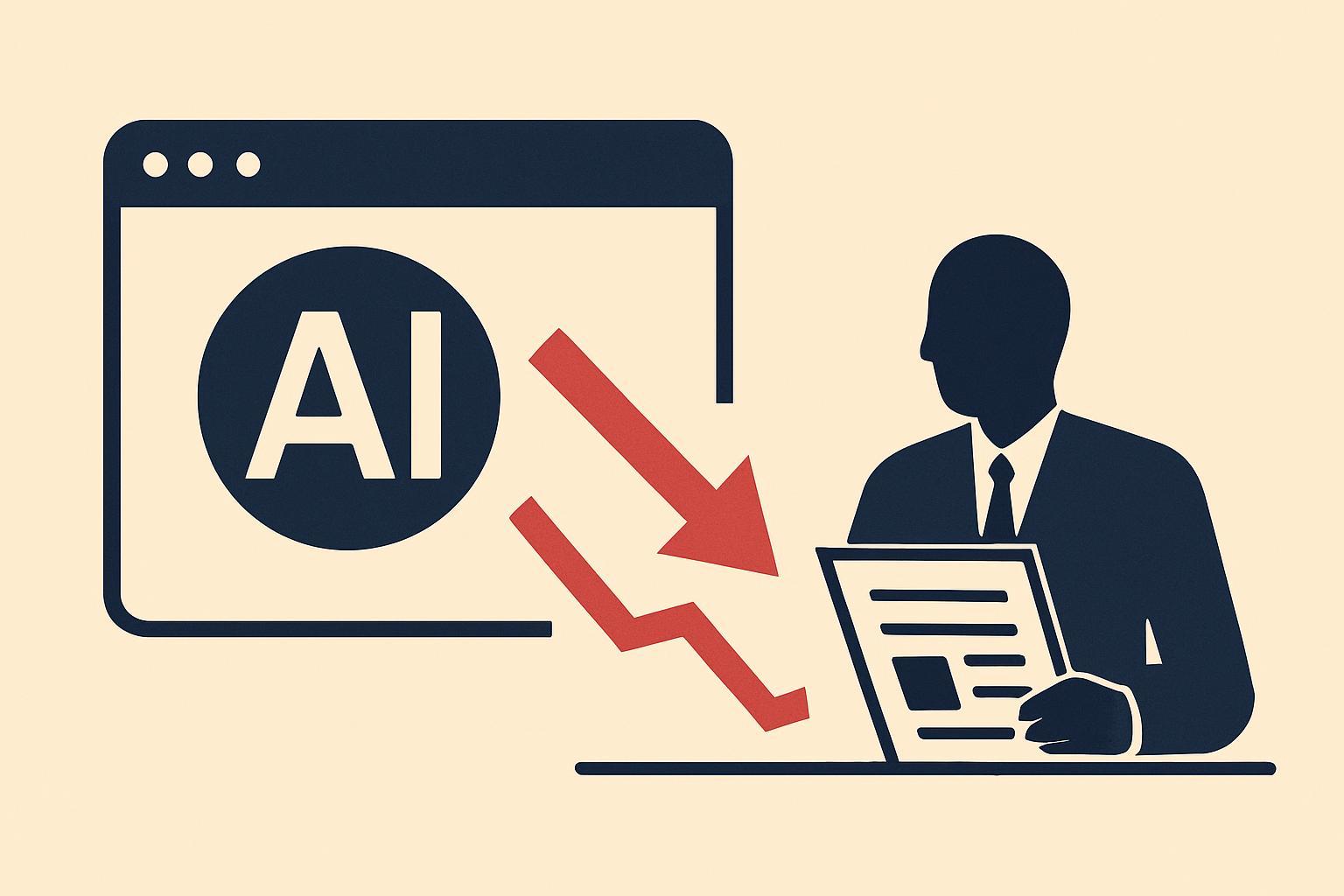
Google's AI-generated answers, called AI Overviews, have grown from appearing in 15% of searches to 43% within a year, and visits to Google’s conversational AI Mode rose from 126 million in June 2025 to 279 million by May 2026.
In this article · 4
Google’s AI-generated search answers, known within the company as AI Overviews, have become far more common in the past year. According to a new report from market intelligence firm Similarweb, AI Overviews appeared in 15% of searches a year ago and in 43% of searches by the time of the report. This rapid rise is changing how people find and consume information online.
AI Mode growth and changing search behavior
Similarweb describes a transition from AI functioning as an added layer on top of traditional search to becoming a central part of the search journey. Google now places users into AI Overviews, from which they can continue research in Google’s conversational AI Mode. Visits to AI Mode rose from 126 million in June 2025 to 279 million by May 2026.
The firm’s data also indicate a shift in user behavior: short keyword queries are being replaced by longer, conversational queries meant for AI, and average search session lengths have increased. As a result, Google is increasingly acting as a destination in itself rather than merely a gateway to indexed websites.
Impact on publishers and AI citations
Publishers are feeling the effects. Similarweb reports declining referral traffic because many AI-generated answers cite sources without generating clicks through to the cited websites. Over the past year the number of AI responses that include a citation rose more than fivefold, yet only 6.8% of U.S. ChatGPT desktop queries included citations as of May 2026.
Some sectors—travel, retail, and sports—see cited responses more often than others, but the overall trend has been damaging for news publishers in particular, who have lost significant referral traffic.
Responses from publishers and infrastructure providers
Industry actors have started to respond. Cloudflare introduced tools that let publishers block AI crawlers from their sites unless AI companies pay for access through Cloudflare’s marketplace.
There is limited good news for publishers with respect to ChatGPT: after a May 7, 2026 search update, U.S. desktop referrals improved substantially. The share of visits that landed on webpages more than doubled from around 25% in March 2026 to nearly 60% by May 30, 2026, suggesting users will click through when traditional blue links are made prominent in AI-driven results.
Why this matters
Similarweb’s findings point to a structural change in search that has economic implications. As Google increasingly sources and presents answers directly, publishers may see reduced traffic and revenue from referrals. The report’s concrete figures—AI Overviews appearing in 43% of searches, AI Mode rising to 279 million visits by May 2026, and the cited-response trends—illustrate the scope of that shift. Technical changes, platform updates, and market tools from companies like Cloudflare could alter the balance, but for now the trajectory favors search platforms that keep users on-site.
Related articles More from the section.

Amazon and Meta Reportedly Discuss Access for Muse Shopping Agent
Amazon and Meta have reportedly held several rounds of talks about allowing Meta’s Muse AI agent to connect directly to Amazon’s store.
Industry · November 25, 2026
European fund managers plan further AI investment despite measurement gaps
A survey of 125 European fund and asset managers found that 64% use AI in live business processes and 91% expect spending to rise over the next three years.
Industry · November 25, 2026
AI investment concerns and potential US tariffs weigh on stocks
Technology shares led a broad market decline on November 25, 2026, as investors questioned the returns on artificial intelligence spending and weighed the prospect of further US import tariffs.
