AI-generated text
Deloitte Urges Businesses to Plan for AI Service Disruptions
Industry · November 23, 2026
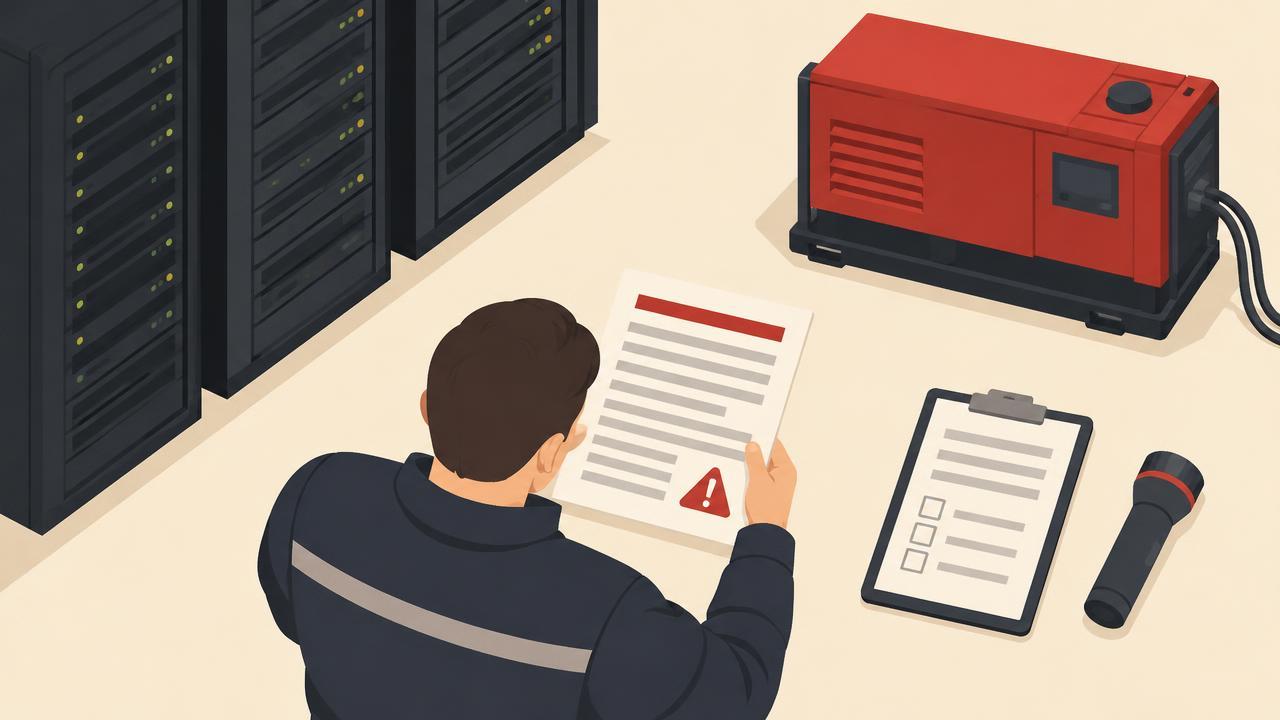
As artificial intelligence becomes embedded in critical workflows, its availability is becoming a business continuity concern, Deloitte experts say.
In this article · 3
The use of artificial intelligence in business is no longer solely a matter of efficiency: it is becoming increasingly important to business continuity. Deloitte experts say that when AI becomes part of critical business processes, companies need to prepare for its disruption just as they would for the failure of other indispensable systems.
Many companies work in connected, cloud-based environments where email, teamwork, document management and AI assistants operate on a single platform. A platform failure or temporary outage can therefore disrupt both communication and the AI functions employees rely on for everyday tasks.
Disruptions can affect entire workflows
An email or chat application outage primarily slows or interrupts communication. The loss of an AI assistant can have more complex effects, because an organization may lose not just one tool but a layer of support for multiple tasks.
Those activities can include finding information, preparing summaries and preliminary analyses, processing meetings, organizing documents, drafting text and supporting decisions. Delegating tasks to AI is not inherently a problem: improving efficiency is the reason companies introduce it. The risk arises when adoption spreads faster than organizational preparation for an outage.
Dr. Barta Gergő, a director at Deloitte Consulting, says integrated digital solutions can increase productivity, but their interconnectedness can also deepen operational dependencies. A problem in a single ecosystem can affect several capabilities needed for daily operations at once. AI governance must therefore address business continuity and operational resilience alongside accuracy, security, data protection and human oversight.
Assessing dependencies and planning alternatives
Deloitte experts recommend that leaders examine which critical tasks can be performed without AI and which processes depend on a single AI solution or cloud ecosystem. They should also establish whether an alternative way of working exists for a service outage, how long a switch would take and whether it would work effectively in practice.
Dr. Sárai Csilla, a senior consultant at Deloitte Consulting, says the next level of organizational preparedness may be the ability to sustain operations without the technology. Companies should first identify workflows that depend on AI, then categorize them according to the degree of dependence and their business importance. In critical areas, they should establish and regularly test alternatives, as organizations do for outages affecting other essential business systems.
AI in continuity planning
AI-dependent processes should also be included in business continuity planning and risk management. Companies need to determine how long individual AI capabilities can be unavailable without endangering operations as a whole, and identify manual or other working methods that can take their place.
Preserving human expertise and skills that can be used without the technology is also necessary. Deloitte says preparedness does not end when AI becomes part of everyday work: companies must plan consciously for its possible disruption as well as benefiting from its use.
Related articles More from the section.

How to Assess the Business Impact of AI-Assisted Development
AI-assisted software development can be costly, and its returns remain uncertain.
Industry · November 25, 2026
Huang’s Conduct Admission Tests Nvidia’s Workplace Culture
Jensen Huang has acknowledged violating Nvidia’s code of conduct while arguing that a breach does not automatically require dismissal.
Industry · November 25, 2026
Mercedes-Benz tests humanoid robots at Hungarian and German plants
Apptronik Apollo 2 humanoid robots used Google DeepMind’s Gemini Robotics 2.5 model to prepare parts at Mercedes-Benz plants in Kecskemét and Sindelfingen.
