AI-generated text
Zhejiang University Researchers Develop Foundation Model for Electromagnetic Signals
Research · November 16, 2026
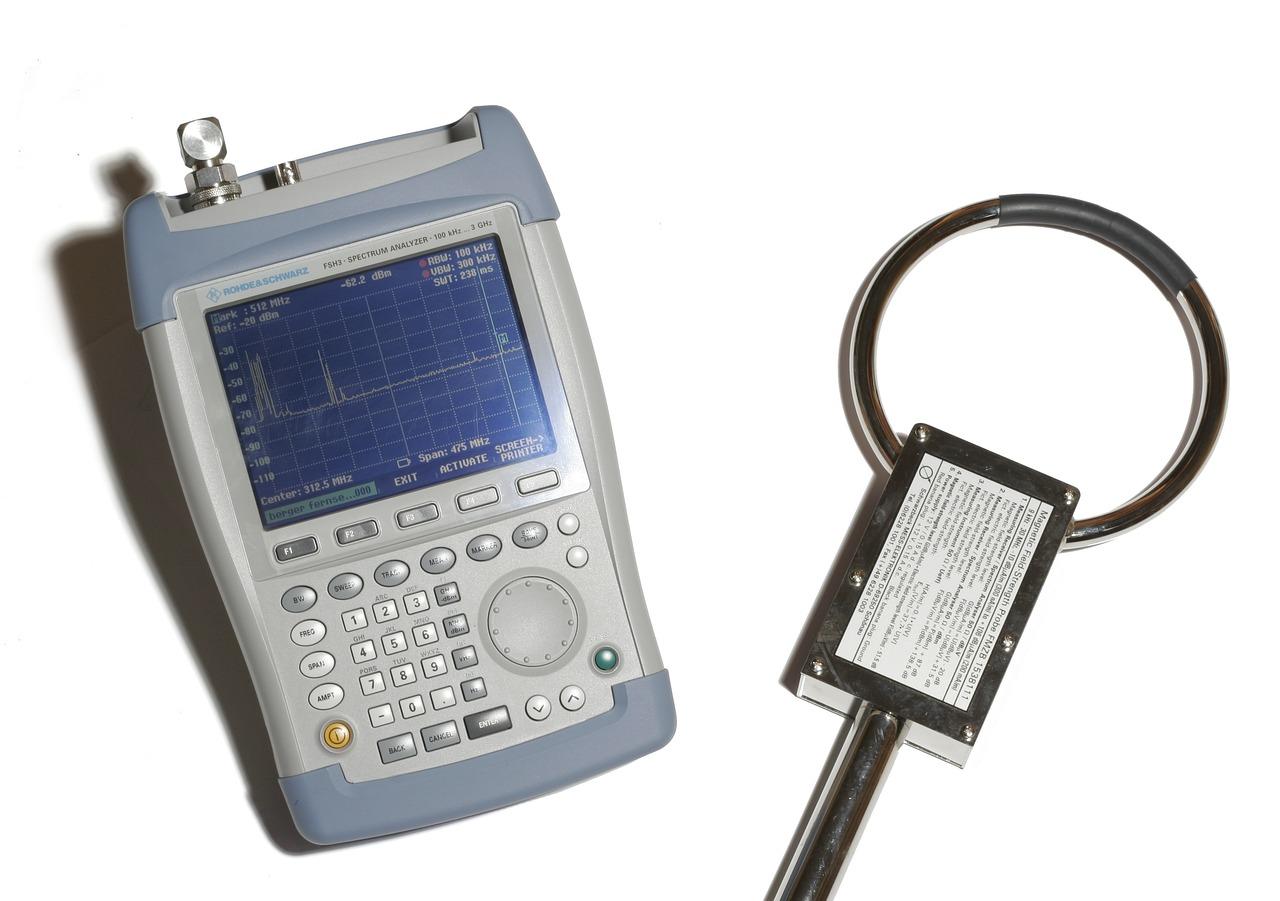
Researchers at Zhejiang University have developed LEMMO, a foundation model that analyzes and generates electromagnetic signals.
In this article · 2
Researchers at Zhejiang University have developed LEMMO, a foundation model designed to characterize raw electromagnetic signals. The model can be used for tasks ranging from identifying the properties of radar signals to recognizing systems that jam communications or radar. It can also generate signals associated with jamming strategies and countermeasures.
LEMMO's results show progress in publicly presented foundation-model approaches to electromagnetic signal analysis. In the reported tests, it often outperformed MERLIN, a model developed and published earlier in the year by Chinese researchers with defense affiliations.
Tasks and test results
The recognition tasks included identifying communication and radar jamming, recognizing modulation, identifying protocols and detecting segments. The model can also determine radar signal properties including bandwidth, duty cycle, number of pulses, pulse repetition frequency and pulse width.
The generation tasks covered communication and radar jamming strategies, as well as methods for countering those forms of interference. Such capabilities could be used to map the electromagnetic battlespace and carry out operations within it.
LEMMO outperformed MERLIN and the other models on every tested perception task except segment detection, where Gemini-3.5 Flash Lite achieved the best result. Its aggregate perception score was 59.3, compared with 43.53 for MERLIN.
The generation results were more mixed. LEMMO led on radar jamming and anti-radar-jamming tasks, while MERLIN performed best on the other generation tasks. LEMMO's aggregate generation score was 47.64, compared with 43.26 for MERLIN.
Why it matters
The research illustrates how generative pre-training can be applied not only to text, images and audio, but also to understanding electromagnetic signals. General-purpose recognition and generation models could make it easier to develop systems for strategically significant signals, with implications for warfare. The approach could also lead to scientific applications.
Related articles More from the section.

New Test Measures AI Model Performance on Long Engineering Tasks
A new study examines how AI model performance on long engineering tasks improves with the computing capacity used during testing.
Research · November 25, 2026
AI labs publish mathematical proof claims awaiting review
OpenAI and Anthropic have published AI-assisted claims on major problems in computational complexity, including the matrix multiplication exponent and the separation of VP from VNP.
Research · November 25, 2026
Register reuse speeds up NVFP4 attention on NVIDIA RTX Blackwell
A revised attention kernel reuses registers and interleaves operations to keep Tensor Cores busier on NVIDIA RTX Blackwell GPUs.
