AI-generated text
Tencent funds growing AI push from rising gaming and advertising revenues
Business · May 13, 2026
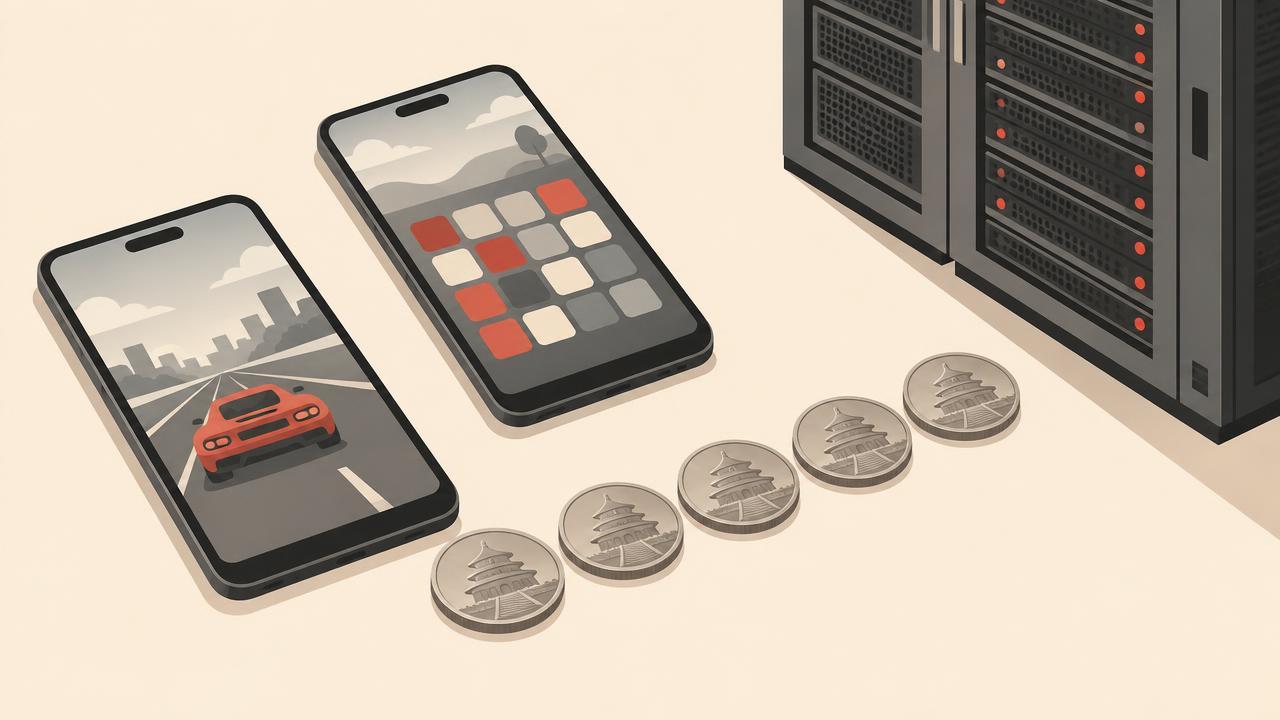
Tencent reported Q1 (Jan–Mar) 2026 results showing revenue of $28.94 billion, up 9% year‑on‑year but slightly below analysts’ expectations, while net profit rose to $8.55 billion.
In this article · 3
Shenzhen‑headquartered Tencent Holdings reported results for the January–March 2026 quarter showing revenue of $28.94 billion, a 9% increase year‑on‑year but 1.3% below analyst expectations. Net profit after tax rose 21% to $8.55 billion, short of the $9.04 billion analysts had forecast.
The company’s report highlights that a significant share of cash generated from its stable gaming and social businesses has been redirected into developing artificial intelligence applications and expanding AI infrastructure.
Performance by segment
- The games and social segment, which accounts for nearly half of Tencent’s revenue, grew revenue by 4% to $14.1 billion. Domestic revenue rose 6% while international revenue increased 14%. Top titles included Honor of Kings, Peacekeeper Elite, Delta Force and Valorant Mobile.
- Social apps including WeChat generated $4.71 billion, a 2% decline versus the comparable period.
- Advertising and marketing delivered robust growth: revenue rose 20% to $5.62 billion. Tencent attributes part of this strength to increasingly effective, AI‑enhanced targeted advertising.
- The fintech and cloud‑related enterprise services division grew revenue 9% to $8.83 billion.
AI investments and product moves
Last month Tencent unveiled Hunyuan 3.0, its most advanced large language model to date; development of the model involved Yao Shunyu, a former OpenAI researcher. The launch forms part of Tencent’s push to close gaps with rivals such as ByteDance and Alibaba, which analysts say have been more aggressive in integrating AI.
In March Tencent announced it will increase AI spending this year, including investments in its own models. Chairman Martin Lau said the company plans to increase capital expenditures in 2026, although he did not provide specifics.
Tencent’s market capitalization stands at about $528 billion. Total capital expenditure last year was roughly $11.6 billion, up from $11.3 billion in 2024. First‑quarter capex rose 6% year‑on‑year to $4.71 billion.
Why this matters
Tencent is using cash flow from mature, revenue‑generating businesses — notably games and advertising — to bankroll large, strategic investments in AI. That approach has likely weighed on short‑term profit beats relative to market expectations, but it underlines a longer‑term strategy to strengthen the company’s AI capabilities and competitive position in China and globally.
The Hunyuan 3.0 rollout and the planned rise in AI and capital spending signal Tencent’s intention to accelerate AI development and narrow the gap to its major domestic peers.
Related articles More from the section.

Banks Seek to Transfer AI Loan Risk to Investors
Banks including Citi and JPMorgan are marketing loan portfolios as they manage their exposure to AI-related debt, according to people familiar with the deals.
Business · November 26, 2026
Nvidia Credit Outlook Shift Raises Questions for AI Financing
Moody’s has changed Nvidia’s credit outlook from positive to stable, while S&P Global has raised concerns about the departure and return of CEO Jensen Huang.
Business · November 26, 2026
Xpeng plans humanoid robot launch as it expands beyond electric cars
Chinese electric vehicle maker Xpeng plans to launch its IRON humanoid robot in the second quarter of next year, with a price comparable to a mid-range electric car.
