AI-generated text
Study Examines Malpractice Risks When Doctors Disagree With AI
Research · November 23, 2026
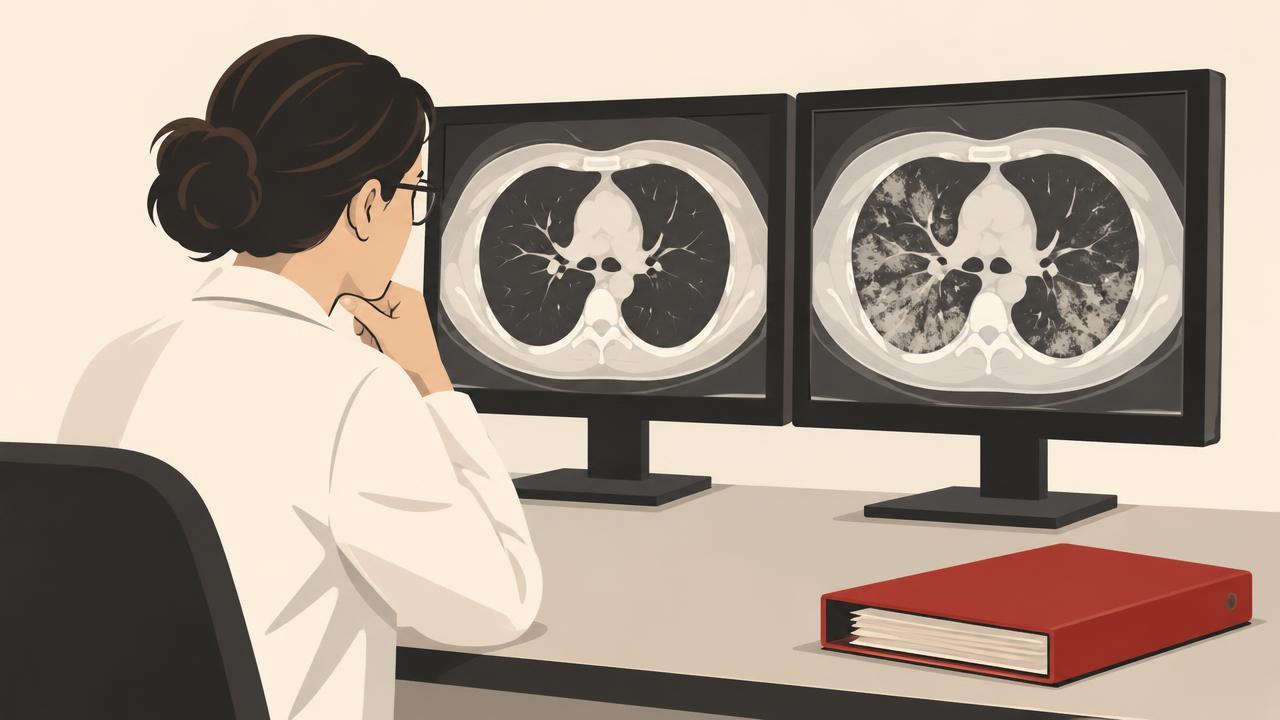
Simulated malpractice cases suggest that jurors may be more likely to find against radiologists when an AI system flags a condition they miss.
In this article · 2
The use of artificial intelligence in medicine could create a new malpractice risk for doctors. In a study using simulated court cases, mock jurors were more likely to side with a plaintiff when a radiologist disagreed with an AI system that had flagged a medical condition.
The findings matter because AI is widely used to analyze medical images and improve diagnostic accuracy, while demand for imaging tests is rising. The systems make mistakes, however, and experts say there are few established legal precedents for how they might change malpractice liability in fields such as radiology.
Patients and the public may remain wary of AI in healthcare while also assuming that the technology is never wrong. That can put doctors in a difficult position when an algorithm flags an abnormality but they disagree. Concern about legal liability could lead some physicians to order costly, potentially unnecessary follow-up tests.
What the simulated cases showed
The researchers examined how AI affected jurors’ views of whether a doctor had met the duty of care expected in treating a patient. They reported their findings in NEJM AI.
One scenario involved a brain bleed visible on a CT scan that resulted in irreversible brain damage. When the AI flagged the abnormality but the radiologist did not identify it, mock jurors sided with the plaintiff 72.9% of the time. In a second case, lung cancer missed on a CT scan led to the patient’s death. When the AI identified lung cancer but the doctor did not, participants sided with the plaintiff 78.7% of the time.
Across the simulated cases, jurors were generally more likely to favor the plaintiff when the AI and radiologist disagreed than when they agreed. However, a smaller share ruled against the physician when they received data on the AI system’s error rate. Experts say that matters because false positives are almost inevitable, and knowing about errors can temper the belief that the technology is always correct.
Defensive medicine and liability
Michael Bernstein, the study’s lead author and an associate professor at the Warren Alpert Medical School of Brown University, said the findings reveal an unintended consequence of adopting AI. Although the technology can help considerably in radiology, its effects are not uniformly positive.
One of Bernstein’s concerns is an increase in defensive medicine: doctors may become overly cautious about lawsuits and order additional scans or other examinations. That can increase costs and patient anxiety. Radiology is a closely watched specialty because AI is used extensively, missing an abnormality can be fatal, and the field carries a high risk of lawsuits.
Researchers are also studying perceptions of responsibility across other medical specialties. In JAMA Health Forum last year, Johns Hopkins researchers noted that responsibility can shift disproportionately to human operators because they are perceived as controlling the technology’s use. They found that physicians were consistently viewed as more liable than AI vendors, health systems that adopted the technology, or regulators.
Bernstein and his colleagues also found that double-checking AI results could reduce doctors’ malpractice risk and affect prospective jurors’ assessments of whether the duty-of-care standard was met. Whether doctors can find time to do so remains a question.
This month, the American Medical Association called for new federal and state laws to shield clinicians from liability when an AI product harms a patient. The organization also wants to shift more responsibility to AI developers and vendors, pressing for laws that require companies to carry adequate liability insurance and disclose product limitations and performance data.
Related articles More from the section.

New Test Measures AI Model Performance on Long Engineering Tasks
A new study examines how AI model performance on long engineering tasks improves with the computing capacity used during testing.
Research · November 25, 2026
AI labs publish mathematical proof claims awaiting review
OpenAI and Anthropic have published AI-assisted claims on major problems in computational complexity, including the matrix multiplication exponent and the separation of VP from VNP.
Research · November 25, 2026
Register reuse speeds up NVFP4 attention on NVIDIA RTX Blackwell
A revised attention kernel reuses registers and interleaves operations to keep Tensor Cores busier on NVIDIA RTX Blackwell GPUs.
