AI-generated text
Startup General Intuition says robotics is close to a 'ChatGPT' moment
Model launches · July 8, 2026
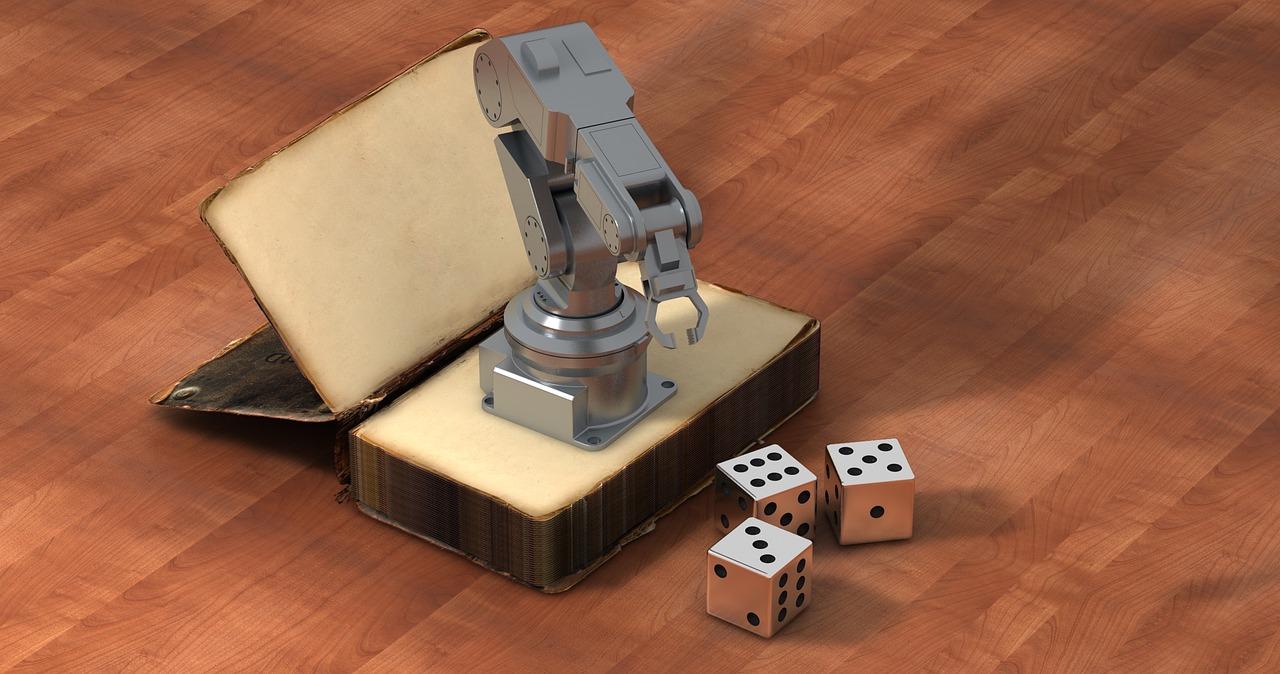
General Intuition, led by CEO Pim de Witte, believes robotics will shift from bespoke robot-specific models to general-purpose foundation models trained on high-quality datasets.
Pim de Witte, CEO of General Intuition, argues that robotics will undergo a shift similar to what foundation models brought to natural language processing. Before models like OpenAI’s GPT series, Claude, or Llama became common, companies tended to build task‑specific NLP models from scratch and train them on large volumes of targeted data. Today, organizations typically start with a general‑purpose model and fine‑tune or prompt it for their needs.
De Witte told TechCrunch on a recent episode of the Equity podcast that he expects embodied AI — systems that move and interact in the physical world — to follow the same pattern. Instead of collecting massive real‑world datasets for each robot type and environment, industry players should invest in higher‑quality datasets that enable foundation models to transfer movement and interaction intuition across many contexts.
"A lot of companies right now are doing lots of specialized work focused on individual embodiments, individual environments, and individual robots," de Witte said. He believes much of that effort will become redundant as more general models emerge. According to him, the core product is the model’s generalization ability: a base level of reasoning about space and time could drastically reduce the amount of real‑world data required. "The reality is, you only need a few minutes," he added.
General Intuition trained its own foundation model on millions of hours of video game data, including action traces such as which controller buttons a human pressed and when. Both de Witte and the company’s lead investor, Vinod Khosla, say that these action data are crucial to building a human‑like intuition for spatiotemporal reasoning.
Last month the startup raised $320 million at a $2.3 billion valuation on the strength of that thesis. The company has shown that its model can play video games for extended periods and, after fine‑tuning on only eight minutes of real‑world robotics data, can also power a quadrupedal robot.
De Witte highlighted that the robot was able to operate zero‑shot using just a front camera, with no additional sensors, in an office environment where dynamic objects and people were moving through the space. He described that result as a significant surprise and a signal of what may be coming.
General Intuition’s long‑term aim is not to manufacture robots itself but to become the foundation model provider for physical AI — a base on which other robotics companies can build. As de Witte put it: "We're not gonna build a self‑driving car company. We're gonna make it 10 times easier for the next person to build a self‑driving car company."
Why this matters
If foundation models for embodied AI can generalize across embodiments and environments, companies would need far less task‑specific real‑world data. That could speed development, lower costs, and enable a wider range of organizations to develop systems that require complex movement and interaction by building on common base models.
Related articles More from the section.

Gemini 4 Neon gains early traction across Google services and APIs
Google says Gemini 4 Neon set a first-day usage record on its paid APIs, while Perplexity reports rapidly growing token volumes.
Model launches · November 23, 2026
Z.ai releases GLM-5.4 with a looped transformer architecture
Chinese AI lab Z.ai has released GLM-5.4, its first model built around a looped transformer architecture.
Model launches · November 20, 2026
Thinking Machines Lab releases Inkling 2 Mini for local AI
Inkling 2 Mini is a multimodal model designed for local use, with roughly 26 billion total parameters and a one-million-token context window.
