AI-generated text
Satya Nadella urges more competition and cheaper AI models as Microsoft shifts strategy
Industry · June 22, 2026
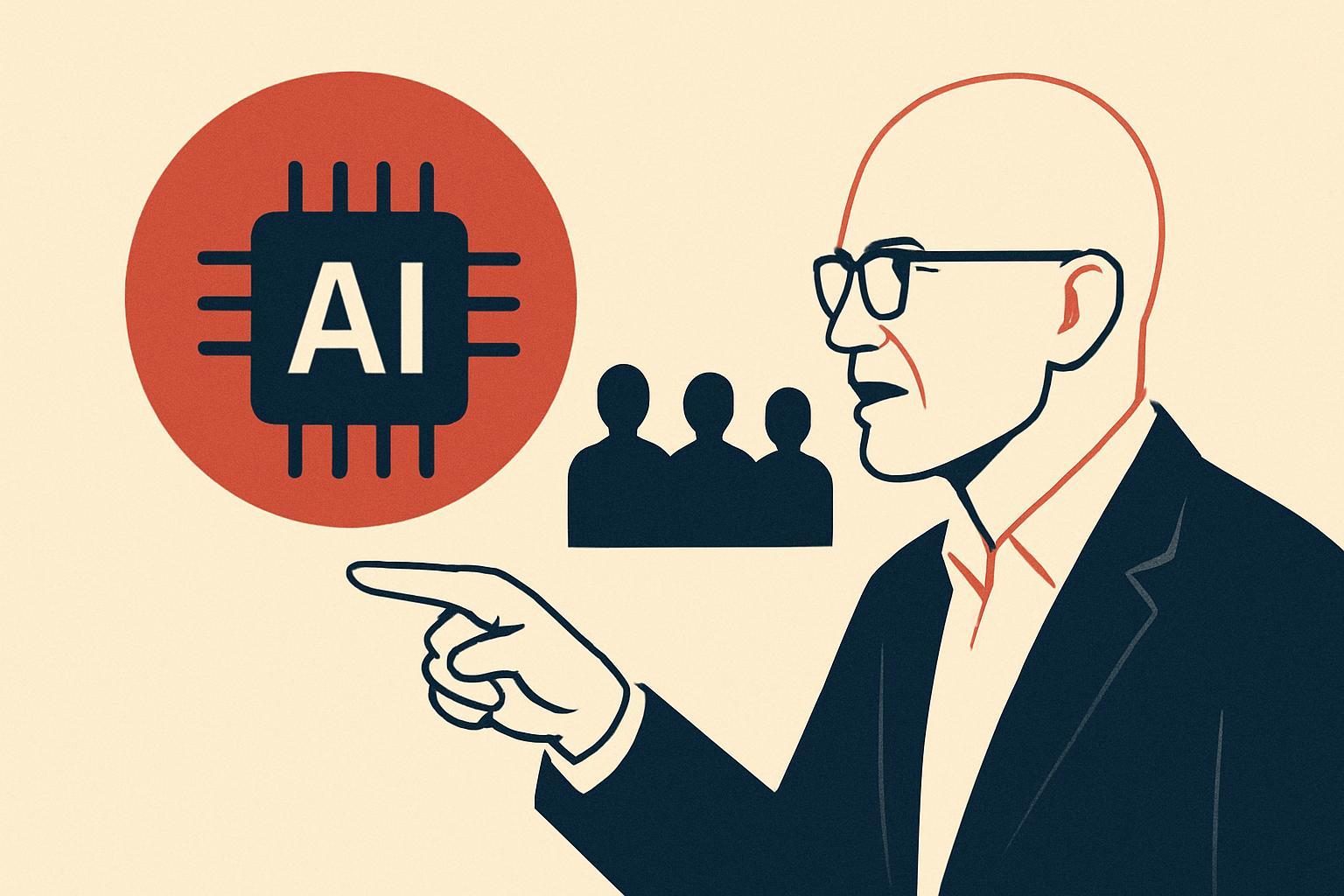
Microsoft CEO Satya Nadella criticized the concentration of power in the AI industry, calling for more accessible, lower-cost models and greater choice for users.
In this article · 5
Satya Nadella, Chief Executive Officer of Microsoft, delivered sharp criticism of how the artificial intelligence (AI) industry currently operates in an interview with the Wall Street Journal. Nadella argued that the future of the technology should not be controlled by a handful of companies, especially when those same actors warn of mass job losses or the potential for dangerous uses while requesting unlimited resources to build more data centers and expand further.
Microsoft’s new direction: cheaper models and more choice
In recent weeks Microsoft has unveiled several lower-cost AI models and new services aimed at reducing costs. Nadella emphasized that the company is building systems that allow users to choose among different models rather than depending on a single provider. He made clear that he rejects a future in which “a few models and a few companies do all of the world’s learning.”
Notably, Microsoft is reportedly considering hosting models from Chinese company DeepSeek. DeepSeek is known for very low-cost solutions, and hosting its models could intensify price competition in the AI market and affect providers such as OpenAI and Anthropic, which currently develop leading closed models. The move is particularly striking given Microsoft’s prior role as a major backer of OpenAI—having invested billions—and its multi-billion-dollar collaboration with Anthropic.
Jobs and the role of technology
On the question of employment, Nadella departs from AI leaders who have predicted massive job losses. He argued the focus should be on reorganizing work rather than eliminating jobs: future companies will need both skilled human knowledge and advanced AI capabilities. Nadella envisions firms becoming continuously learning systems where human experience and AI jointly create value.
He stressed that technological progress alone is not sufficient: the industry must demonstrate that it creates real economic opportunities for people. According to Nadella, the sector must earn society’s permission and trust to become one of the defining technologies of the next decade.
Energy demand and alternative technologies
The article also notes that rising energy demand is a major constraint on AI development. Researchers inspired by the human brain have developed neuromorphic chips based on ionic computation, which they claim are much more energy-efficient and easier to align with biological systems.
Key personnel moves in the industry
The piece further reports that Noam Shazeer, a key contributor to the Transformer architecture and an influential figure in modern AI, has moved from Google to OpenAI. Given Shazeer’s role in laying foundations for current AI systems, this hiring is considered significant within the industry.
Conclusion
Satya Nadella’s criticisms and Microsoft’s strategic shift signal a move toward broader access to models and more aggressive price competition. Nadella argued that earning public trust and proving AI’s ability to generate broad economic benefits are essential prerequisites for the technology’s widespread acceptance.
Related articles More from the section.

Tech Selloff Resumes as Neocloud Debt Concerns Grow
Technology stocks fell again on Wednesday as a rally following Jensen Huang’s return to Nvidia lost momentum.
Industry · November 25, 2026
How to Assess the Business Impact of AI-Assisted Development
AI-assisted software development can be costly, and its returns remain uncertain.
Industry · November 25, 2026
Huang’s Conduct Admission Tests Nvidia’s Workplace Culture
Jensen Huang has acknowledged violating Nvidia’s code of conduct while arguing that a breach does not automatically require dismissal.
