AI-generated text
Researchers train talkie-1930-13b on pre-1931 English; it generates modern Python after few examples
Research · May 8, 2026
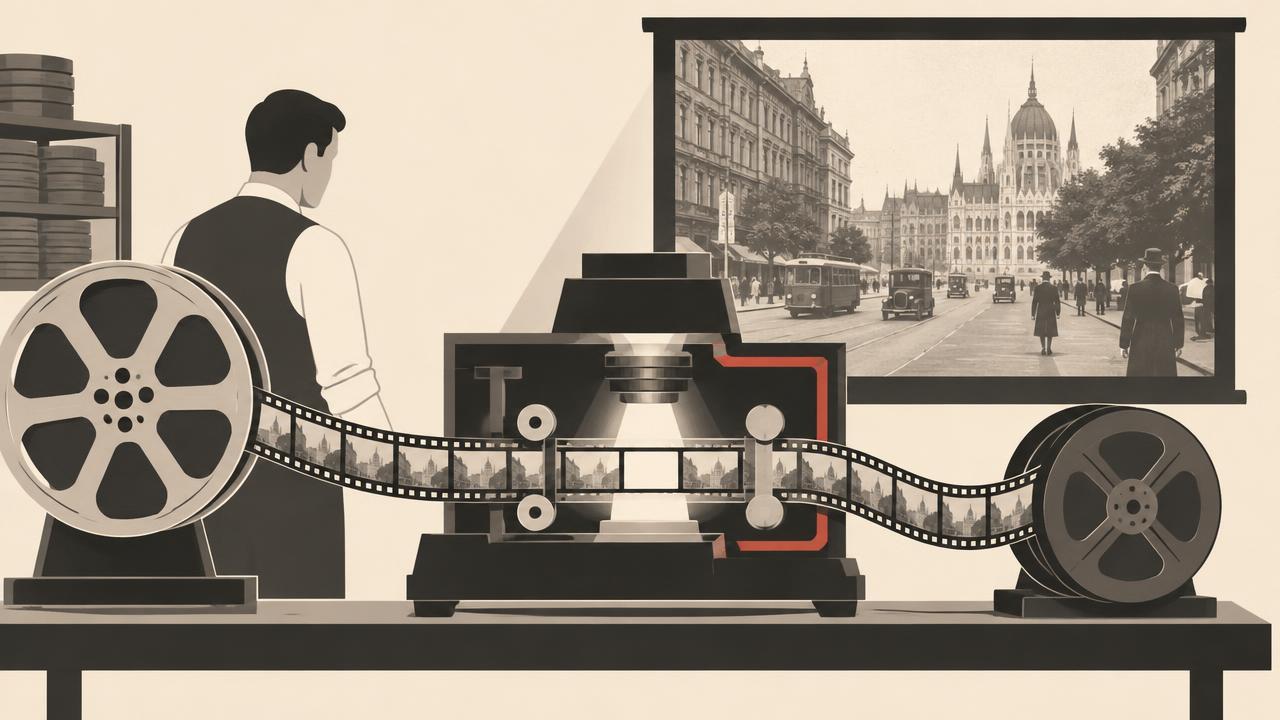
Alec Radford and collaborators trained a model called talkie-1930-13b using only English text published before January 1, 1931.
Alec Radford and collaborators have developed a model called talkie-1930-13b, described by the team as a "sealed antique brain." The training data for the model consisted exclusively of English-language texts produced before January 1, 1931 — meaning no modern internet content, documentation, or computer-era texts were included.
What the model did
After researchers provided the model with a small number of coding examples, talkie-1930-13b produced working Python code. The team argues this was not simple memorization of training material: the model appeared to reconstruct solutions from patterns in language, mathematics, logic, and human intent rather than from knowledge of modern tools.
Why this matters
The experiment highlights that language models may do more than reproduce historical text verbatim. If the model indeed used underlying patterns to infer how contemporary tools behave, past text corpora could serve not only as archives but also as launchpads for anticipating and solving future problems. This perspective could change how we value and assess AI capabilities and risks.
Limits and caution
The brief report does not disclose detailed experimental settings, the number of examples shown, or the criteria used to judge the code as "working." Those details are necessary to evaluate how generalizable the phenomenon is and to rule out alternative explanations, such as inadvertent data leakage.
Implications
If this kind of generalization scales, future models might not only absorb historical knowledge but also use universal patterns from the past to precompute aspects of the future. That would require rethinking development priorities, evaluation metrics, and safety considerations in AI research.
Summary
The talkie-1930-13b experiment demonstrates a possibility: that language models trained on historical material can infer technical solutions they were never explicitly exposed to. The result is intriguing, but further documentation and independent verification are needed before drawing broad conclusions.
Related articles More from the section.

Register reuse speeds up NVFP4 attention on NVIDIA RTX Blackwell
A revised attention kernel reuses registers and interleaves operations to keep Tensor Cores busier on NVIDIA RTX Blackwell GPUs.
Research · November 25, 2026
Simulations Test AI Assistants’ Reasoning About Social Motives
Researchers have developed a multi-agent simulation framework to test how AI assistants infer hidden motives from users’ accounts of social interactions.
Research · November 25, 2026
Amateur astronomers use AI to search telescope data for exoplanets
Kevin Bond and Ethan Byrd independently used OpenAI models to search public observations for signals that could indicate exoplanets.
