AI-generated text
PwC: AI could affect 900,000 Hungarian jobs over 15 years
Industry · May 7, 2026
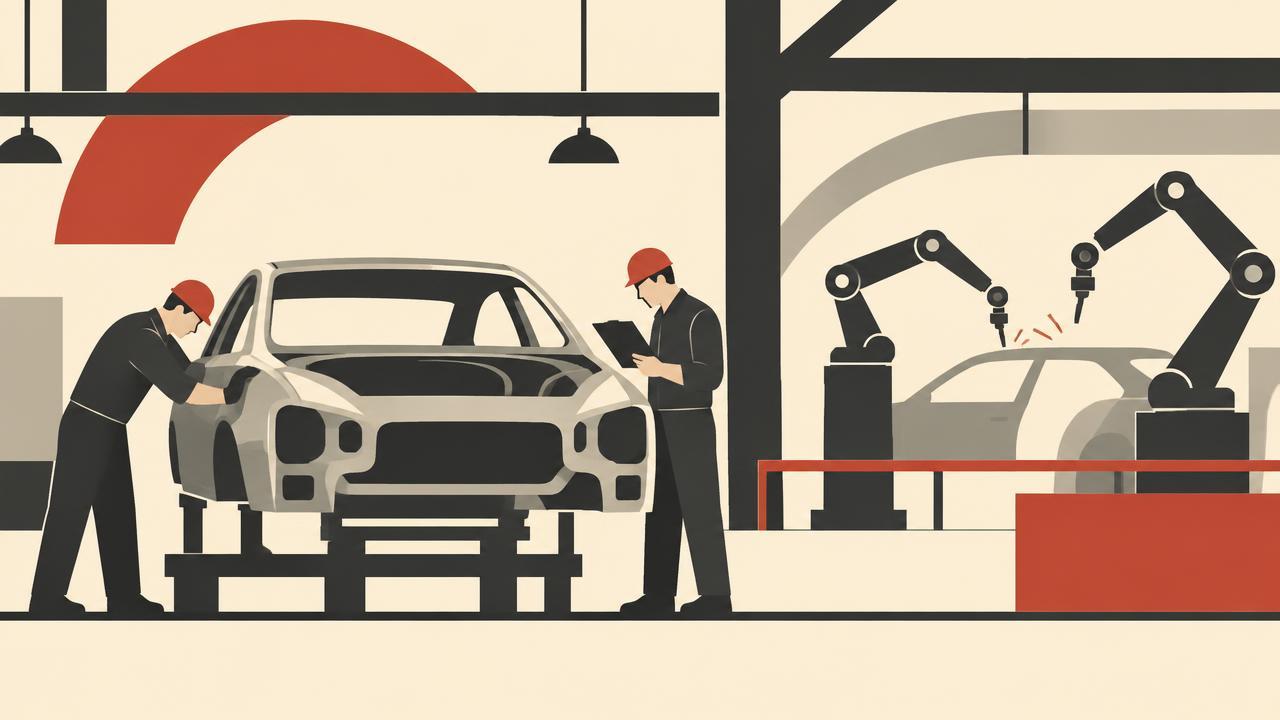
According to a PwC Magyarország study, artificial intelligence and automation could affect around 900,000 Hungarian jobs over the next 15 years, with impacts becoming pronounced mainly from the 2030s.
A recent PwC Magyarország study finds that artificial intelligence (AI), automation and machine learning will influence Hungary's labour market in phases, potentially affecting about 900,000 jobs over the next 15 years. The report notes that because Hungary is classified among industry-focused economies by the OECD, the most significant impacts are expected from the 2030s onward.
Which sectors are most exposed?
PwC identifies manufacturing, transport/logistics and construction as the sectors likely to experience the most dramatic change due to AI adoption. More than one-third of Hungarian workers are employed in these sectors, and roughly two-thirds of the jobs that AI will affect fall within them.
Kerekes Antal, PwC Magyarország partner responsible for Technology advisory, said: “Our estimates indicate that more than 900,000 jobs will be affected by AI over the next 15 years. Given the country’s economic structure, it can be concluded that automation of manual, precision-demanding and monotonous tasks could cause the largest share of change in the labour market here.”
Gendered effects
The study also highlights differing timing of impacts between women and men. Riba Gábor, PwC Magyarország AI expert, explained: “In the early stages (2020–2030) AI’s spread is likely to affect female workers more, while male workers will become clearly more affected in the third wave. This also means that because many roles dominated by men will be highly exposed, men’s future will be influenced more strongly by AI and automation.”
The three waves summarized
- First wave (early 2020s): AI performs simple computational tasks and analysis of structured datasets, impacting data-processing industries such as finance and ICT.
- Second wave (mid-2020s): AI takes on business-support and simple decision-making functions (for example general data intake, reconciliation, HR and accounting tasks). In controlled environments like warehouses, autonomous object handling is expected.
- Third wave (2030s): AI appears in automation of physical and manual precision tasks (for example assembly and transport), producing the largest effects in Hungary’s industry-focused job categories.
Methodology and purpose
The analysis is based on publicly available statistics and interviews conducted primarily via the Mesterséges Intelligencia Koalíció (MIK). Following PwC UK’s methodology from the publication "Will robots really steal our jobs?", the research treats AI’s labour-market effects as three time-separated waves and examines impacts by economic sector, occupation type and worker groups.
The study aims to illustrate labour-market effects with statistical evidence and to draw policymakers’ attention to the coming changes to support preparedness for an evolving labour market.
Additional information
The English-language study How will AI impact the Hungarian labour market? is available on PwC Magyarország’s website. The research team included international students from the CEMS programme at Corvinus University of Budapest.
Related articles More from the section.

SAP considers cutting more than 10,000 jobs amid AI shift
SAP is considering eliminating more than 10,000 positions as it adapts its business to artificial intelligence, according to Bloomberg.
Industry · November 26, 2026
OpenAI employee saw potential for mathematical applications of the model early on
An OpenAI employee referred to in the text as Ven believed early on that the company’s model at the time might be capable of solving the Millennium Prize Problems.
Industry · November 26, 2026
GTA VI and Anthropic IPO Highlight Debate Over AI and Creative Work
The reported launch of Grand Theft Auto VI has renewed debate over whether AI can replicate the painstaking work behind ambitious video games.
