AI-generated text
Pope Leo’s encyclical urges slowing and stricter regulation of artificial intelligence
Regulation · May 25, 2026
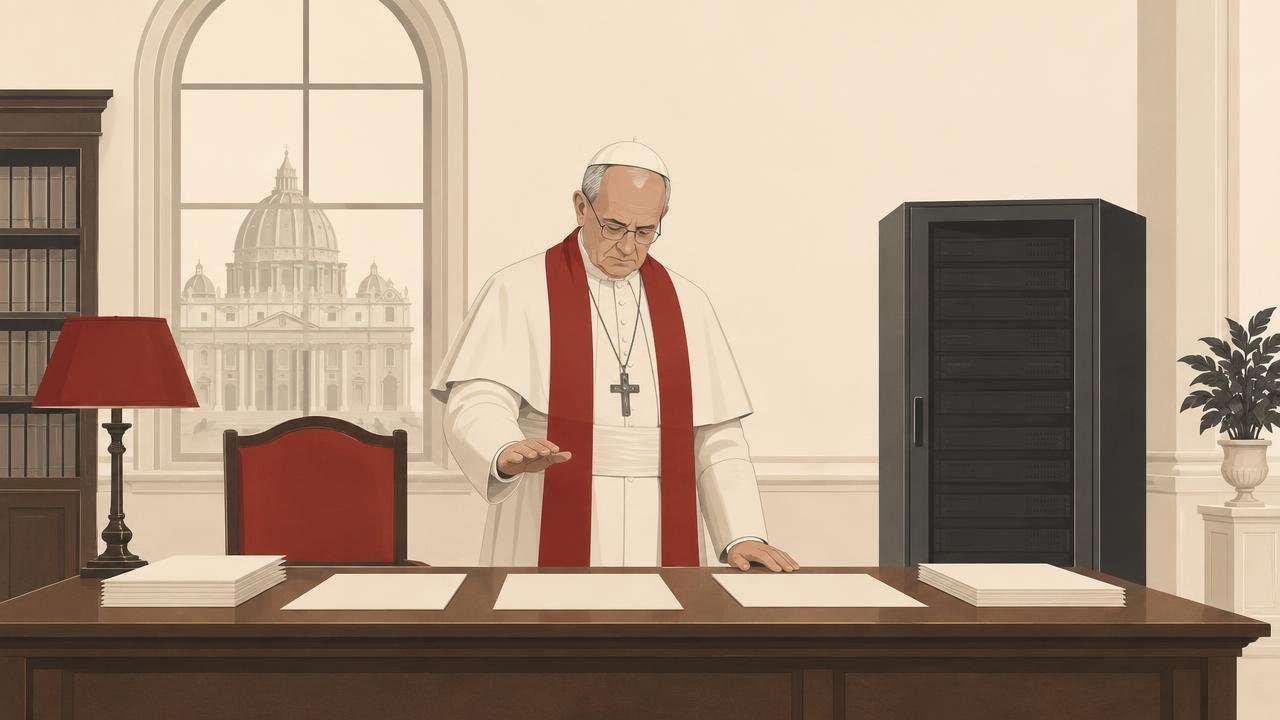
Pope Leo’s first encyclical calls on governments to slow the development of artificial intelligence, introduce strong legal frameworks and independent oversight, and prevent data ownership from remaining solely in private hands.
In this article · 4
In his first encyclical, Pope Leo urged governments to slow the development and deployment of artificial intelligence systems. The nearly 43,000-word document published on Monday was worked on since his election just over a year ago and represents one of the highest-level teachings directed to the Church’s 1.4 billion members.
Main demands and concerns
- Pope Leo warned that AI systems spread misinformation, amplify conflicts, and threaten to push the world onto a path of “endless war.”
- He called on policymakers to ensure that ownership of AI data does not remain exclusively in private hands.
- He said political decision-makers must protect workers’ rights and pay special attention to safeguarding children from harms associated with the technology.
- The pope urged measures to temper competition among companies working on artificial intelligence.
Pope Leo called for "more active political engagement" capable of slowing things down when everything accelerates. He emphasized the need for "solid legal frameworks," "independent oversight," "informed users," and a political system that does not evade responsibility.
Military use and ethical limits
The encyclical states that any use of artificial intelligence in warfare must be subject to the "strictest ethical limits." Pope Leo described delegating lethal decisions to AI systems as "unacceptable."
Historical context and social justice
Before discussing AI ethics, the pope referenced the Church’s long-standing teachings on social justice. He specifically cited his predecessor, Pope Leo XIII, who in 1891 issued the Rerum novarum calling for better wages and working conditions for laborers during the Industrial Revolution.
Pope Leo condemned what he called "new forms of slavery" related to AI: the hardships faced by people who maintain AI systems and by factory workers who manufacture computers and smartphones used with these technologies.
Why this matters
The encyclical combines moral guidance with a political message: governments and regulators should not leave the rapid advance of technology solely to markets and corporations. It stresses strengthening legal and institutional frameworks, moderating competitive pressures among AI firms, and protecting social groups—especially workers and children.
With this encyclical, Pope Leo adds a significant voice to the global debate on AI policy, leveraging the Church’s broad international constituency to exert moral and political influence.
Related articles More from the section.

Nvidia pauses some server shipments to Southeast Asia
Nvidia has told manufacturing partners to pause server shipments to four Southeast Asian countries while it reviews compliance with U.S.
Regulation · November 26, 2026
Lawyer warns companies of AI compliance and data protection risks
At the AI & Digital Transformation 2026 conference, Taylor Wessing lawyer János Kopasz warned that companies face regulatory risks even before the EU AI Act is fully applied.
Regulation · November 26, 2026
Pentagon Denies Report of Proposed Pressure to Restore Jensen Huang at Nvidia
The Washington Post reported that Pentagon leaders discussed using a Cold War-era law to pressure Nvidia over Jensen Huang’s return as chief executive, a claim a Defense Department official denied.
