AI-generated text
OpenAI Explores Building an Agent-Centric Smartphone
Business · May 8, 2026
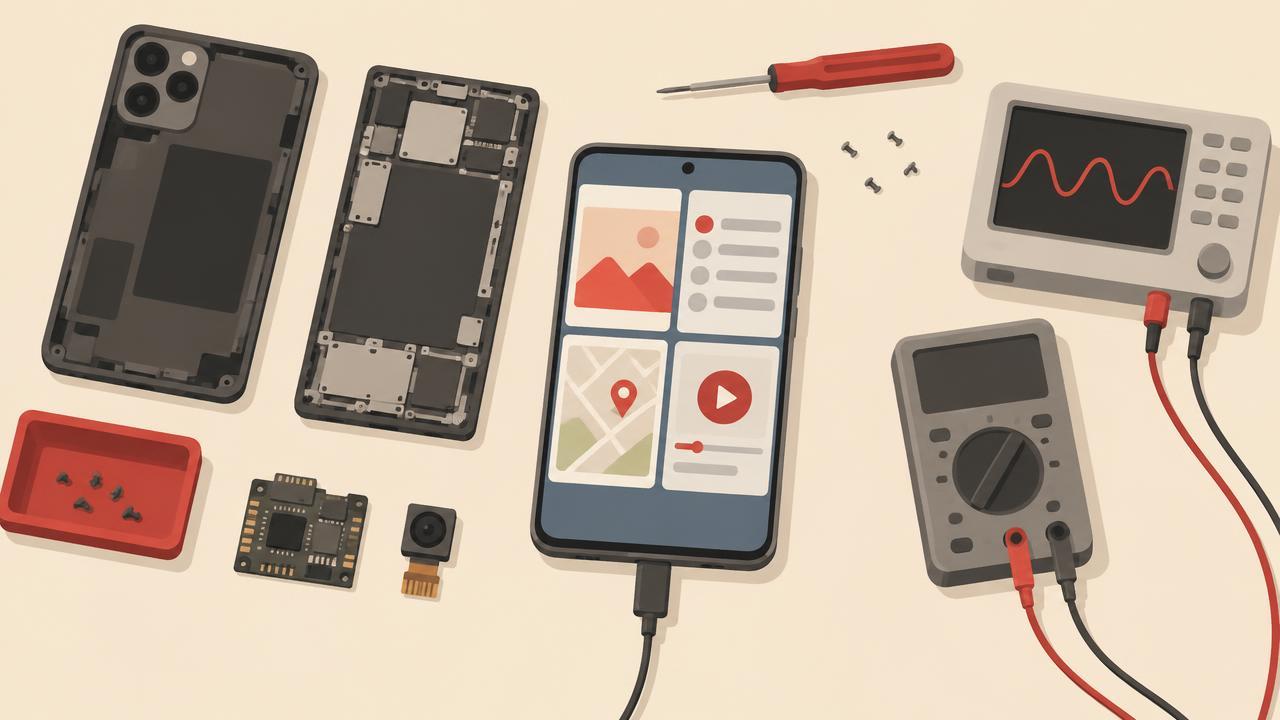
OpenAI is reportedly investigating development of its own smartphone in collaboration with MediaTek, Qualcomm, and Luxshare, aiming to centre the device around AI agents rather than traditional apps.
In this article · 5
OpenAI is reportedly exploring development of a smartphone following its moves into earbuds, working with MediaTek, Qualcomm, and Luxshare on a device designed around AI agents instead of conventional apps. Qualcomm shares jumped about 8% on the news.
What’s being explored
According to the report, OpenAI is investigating a smartphone concept that would prioritize AI agents at the operating layer and user experience. The effort would involve chipmakers and hardware assemblers — specifically MediaTek, Qualcomm, and Luxshare — in designing a device where agents, not app icons, manage interactions.
The proposed distinction is that instead of a traditional app-store and app-icon model, the phone would use AI agents to continuously handle context, sensor data, and user tasks.
Why this matters
Today’s app economy relies on two dominant gatekeepers that control distribution, permissions, payments, defaults, and system access. An agent-first phone aims to challenge that stack by reshaping the hardware and operating layer, reducing dependence on incumbent platforms such as Apple and Google.
ChatGPT is reported to be approaching 1 billion weekly users, underscoring OpenAI’s ambition: the company appears to want more than another app — it seeks control of the operating layer, chip path, sensors, and the contextual data stream that drives agent behaviour.
Strategic and market considerations
The report notes OpenAI continues to compete with Anthropic in the space of agents, but hardware may align better with OpenAI’s capabilities than incremental enterprise software expansion. A phone running "Openclaw-like" agents could provide a clearer route: own the surface and the context, then let agents supplant at least part of the app layer.
Unknowns and limitations
The reporting does not include technical specifications, a timeline, or detailed financing and manufacturing arrangements. It is also unclear how such a collaboration would interact with existing operating systems and ecosystems, or what regulatory and approval challenges an effort to reduce platform dependency would face.
Conclusion
If realized, OpenAI’s move into hardware would be a significant strategic shift aimed at challenging the rules and economics of current mobile platforms. Success would depend on partner roles, technical execution, user adoption, and the regulatory environment.
Related articles More from the section.

Banks Seek to Transfer AI Loan Risk to Investors
Banks including Citi and JPMorgan are marketing loan portfolios as they manage their exposure to AI-related debt, according to people familiar with the deals.
Business · November 26, 2026
Nvidia Credit Outlook Shift Raises Questions for AI Financing
Moody’s has changed Nvidia’s credit outlook from positive to stable, while S&P Global has raised concerns about the departure and return of CEO Jensen Huang.
Business · November 26, 2026
Xpeng plans humanoid robot launch as it expands beyond electric cars
Chinese electric vehicle maker Xpeng plans to launch its IRON humanoid robot in the second quarter of next year, with a price comparable to a mid-range electric car.
