AI-generated text
Google unveils broad set of agent products at I/O 2026
Tools · May 20, 2026
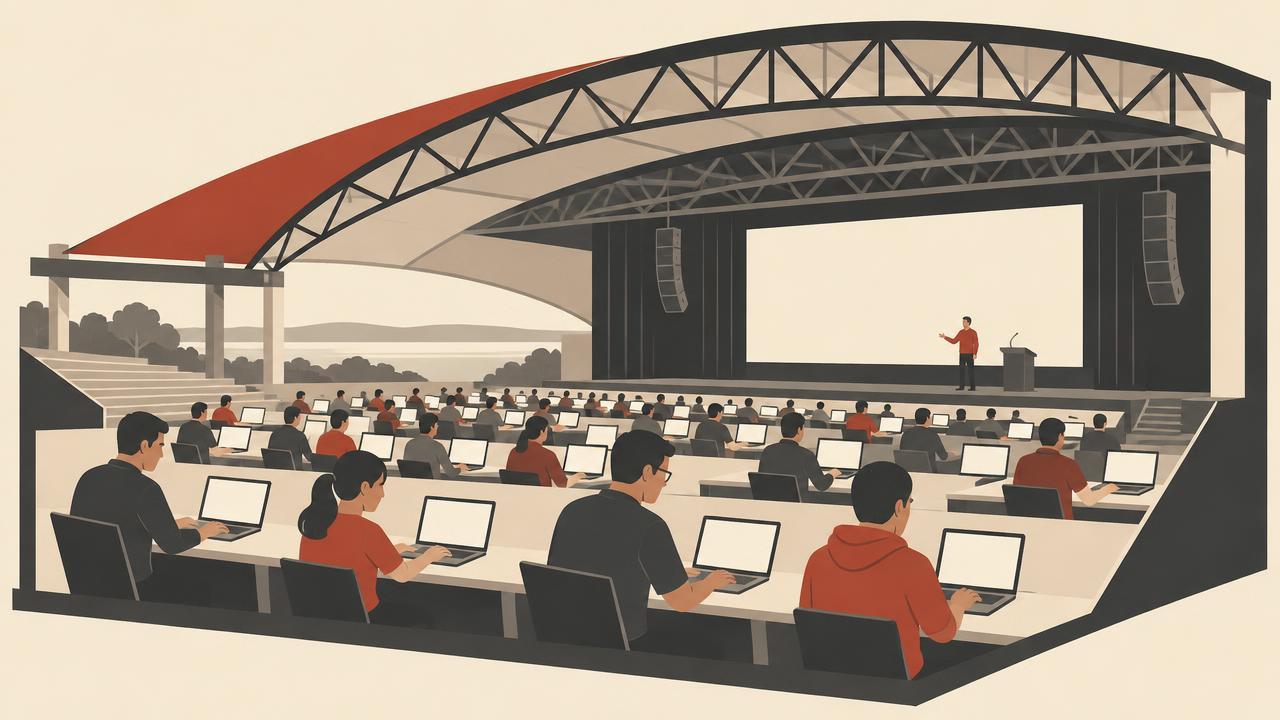
At I/O 2026 Google introduced a wide set of agent-focused products spanning development tools, persistent cloud agents, a new agent-aware UI layer for Android, and a commerce protocol stack allowing agents to transact.
At I/O 2026, Google introduced a set of agent-focused products and technologies that span much of its stack. Announcements included Antigravity 2.0 as a standalone developer environment, Gemini Spark as a persistent cloud agent running 24/7, Android Halo as a new UI layer for agent awareness, and a full commerce protocol stack that enables agents to spend money on behalf of users.
What was announced
- Antigravity 2.0: presented as a standalone development environment aimed at building and operating agents.
- Gemini Spark: a persistent cloud agent designed to run continuously and perform real tasks across Google products such as Docs and Gmail.
- Android Halo: a new interface layer for Android intended to make agents’ presence and behavior more apparent to users.
- Commerce protocols (UCP and AP2): a protocol stack that addresses the problem of allowing agents to execute purchases and other financial transactions on users’ behalf.
Scale and cost details
Google demonstrated scale-related metrics during the announcements: a demo involving a 93-subagent operating-system build and an operation using 26 billion tokens were shown, with an indicated cost of about $1,000. The company presented these figures as evidence of scalability and production readiness.
Why this matters
Taken together, these elements form an integrated agent architecture: development tools, always-on cloud agents, OS-level integrations and commerce protocols. That structure represents a different, more comprehensive approach to agents compared with other players.
However, the products shown on launch day were described as incremental advances on existing concepts rather than a single, category-defining breakthrough. In other words, Google is assembling a complete platform, but the individual pieces will feel familiar to observers.
Conclusion
Google’s I/O 2026 announcements signal a serious push to build an agent-centric ecosystem. The demonstrated scale and the commerce protocols are notable, but the true impact will depend on how these technologies perform in broad, real-world use.
Related articles More from the section.

T3 Code changes its user identification method
The open-source T3 Code project has stopped using Claude and Codex authentication files to identify users and switched to an estimate based on installations.
Tools · November 24, 2026
Amateur astronomers find possible signs of planets in public telescope data
Amateur astronomers Kevin Bond and Ethan Byrd independently searched public telescope data for signs of planets orbiting distant stars.
Tools · November 24, 2026
Development of an embeddable coding agent core underlies a command-line tool
An unnamed developer tool operates through a command-line interface because it is a thin wrapper built on the libfx library.
