AI-generated text
DeepMind publishes AlphaGenome Atlas mapping effects of every single-base human genome mutation
Tools · September 9, 2026
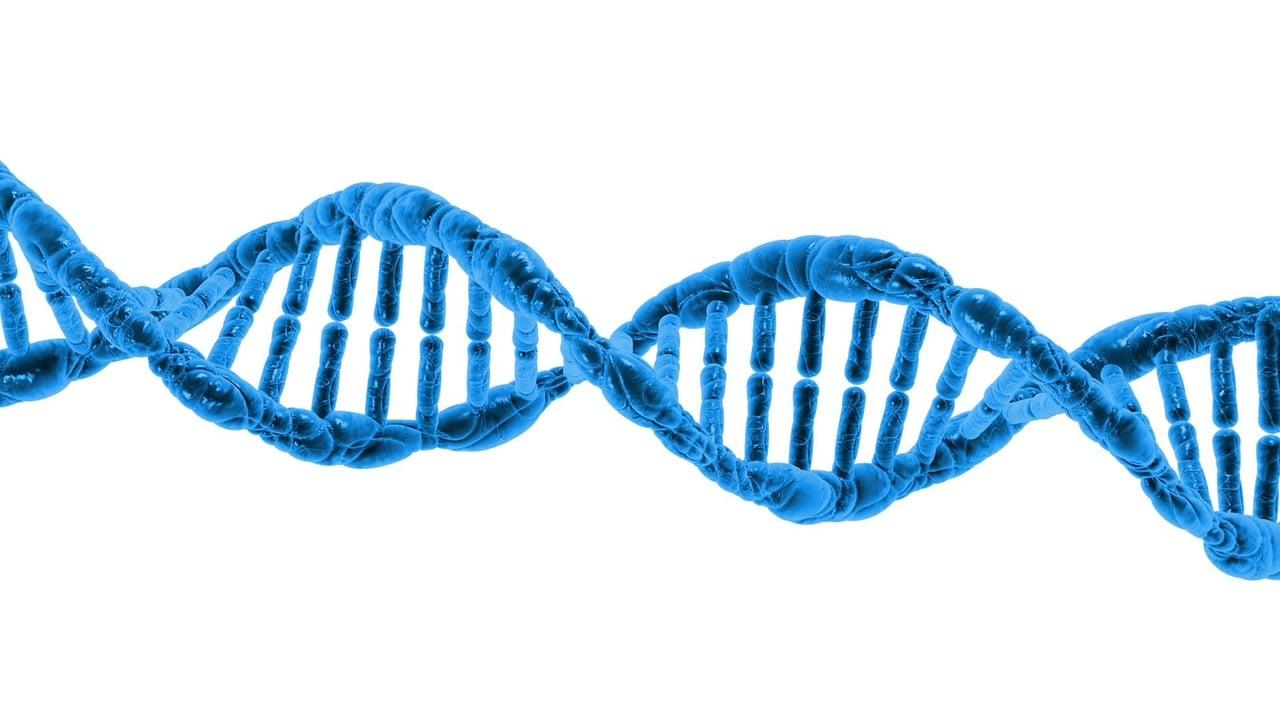
DeepMind has released AlphaGenome Atlas, a precomputed dataset predicting the effects of every possible single-nucleotide change in the human genome.
In this article · 6
DeepMind has released the AlphaGenome Atlas, a precomputed resource that provides predicted effects for every single-letter (single-nucleotide) mutation in the human genome. According to the company, the atlas covers roughly 9 billion possible single-base substitutions.
What the atlas contains
For each mutation DeepMind computed about 27,000 different molecular predictions. These predictions address areas such as gene expression, RNA splicing, chromatin folding, and three-dimensional (3D) structure. The full dataset occupies approximately one petabyte, and the results are available to query via a web browser.
Why this matters
Sequencing the human genome was once an expensive, time-consuming task: the Human Genome Project took 13 years and cost about $2.7 billion just to determine the nucleotide sequence. DeepMind’s approach ran AI models across the large space of possible mutations and organized the outputs into a searchable map. As a result, researchers who previously needed GPU clusters, complex pipelines, or dedicated bioinformatics teams to run large-scale in silico screens may now only need a well-formed question to query the atlas.
Limits and implications
DeepMind has not "solved" the genome. The atlas provides model-based predictions at the molecular level, but real biological effects, disease mechanisms, and clinical significance require experimental validation. Nonetheless, the development shifts a key bottleneck: computational and data-access hurdles are largely reduced, while the challenges of interpretation, experimental follow-up, and defining useful queries have become more central.
Context
This work builds on DeepMind’s earlier, widely known achievement with AlphaFold, which made protein 3D structure predictions broadly available years ago. AlphaGenome Atlas now extends large-scale, precomputed predictive layers to the level of the genome.
What researchers can do with it
Researchers can more quickly search for candidate variants, prioritize experiments, and use the atlas’s predictions as starting points for functional studies. Responsible use requires awareness of model limitations and experimental confirmation of important findings.
Conclusion
AlphaGenome Atlas does not replace laboratory or clinical validation, but it considerably lowers the barrier for screening genomic variants and shaping research priorities. The major change is a shift from computational and access constraints to the scientific task of interpretation and purpose-driven investigation.
Related articles More from the section.

Nothing unveils Ear (note) earbuds with AI note-taking
Nothing has introduced Ear (note), a pair of earbuds designed to transcribe and summarize conversations, calls and online meetings.
Tools · November 26, 2026
Four AI Agents Learn to Share Information Using One Language Model
An experiment trained four agents backed by a shared small language model to exchange private information and sort numbers.
Tools · November 26, 2026
Poliext Uses AI to Speed Up Meeting Follow-Up
Poliext says it has reduced the time needed to prepare meeting summaries from 30–45 minutes to half a minute to one minute using Minuteory.
