AI-generated text
Chinese firms buy over a million Nvidia GPUs as local AI chip output lags
Industry · October 14, 2026
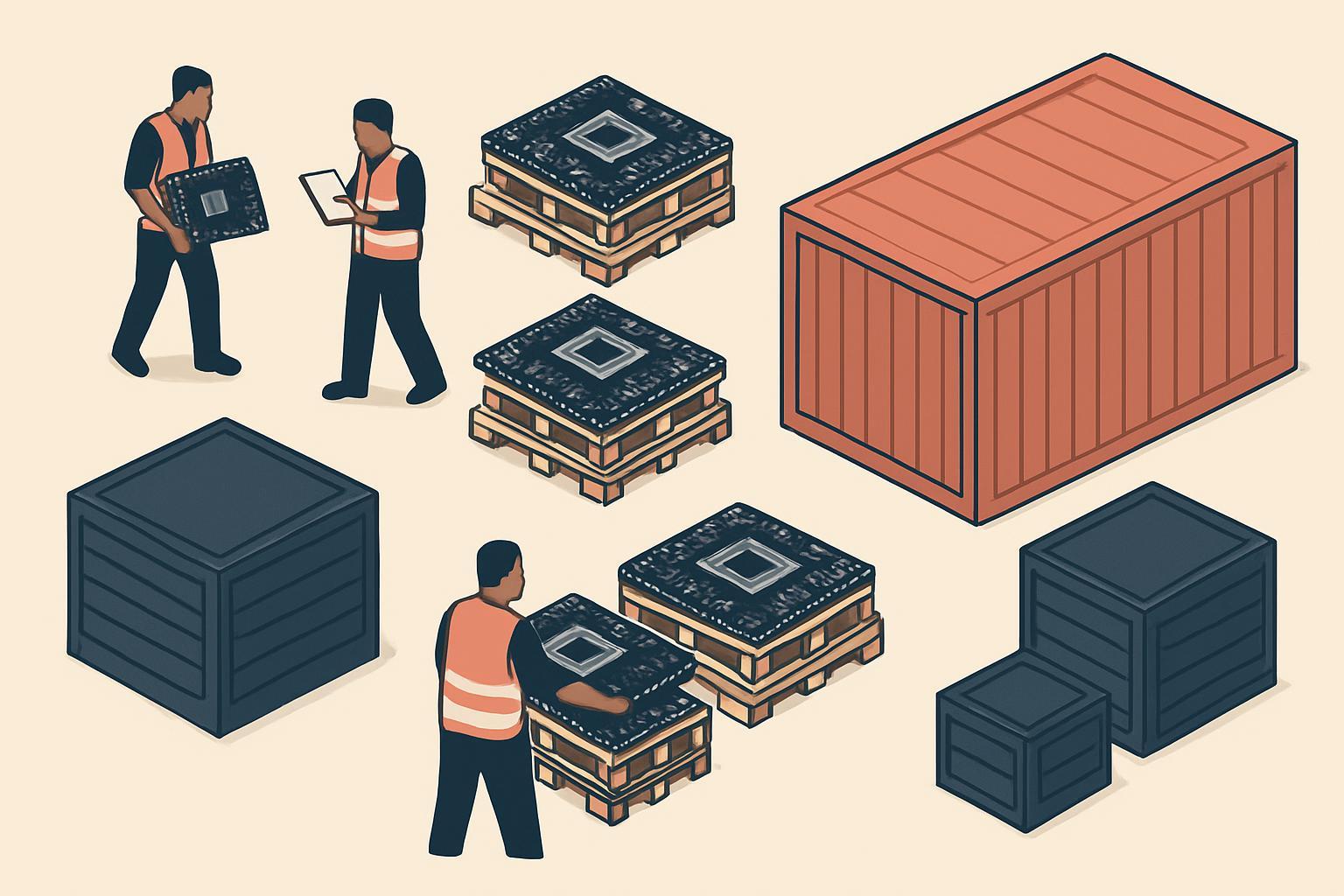
Chinese technology companies purchased more than one million Nvidia graphics processors within a year to help meet rising AI capacity needs, the Financial Times reports.
In this article · 6
Chinese technology companies purchased more than one million graphics processors (GPUs) from Nvidia within a year to help meet rising artificial intelligence capacity needs, the Financial Times reports, citing industry sources.
Why this is happening
According to the report, China has substantially increased domestic AI-chip production, but supply still falls short of demand. The article states that domestic production is expected to reach about 3.5 million chips, while demand exceeds 5 million units, leaving a shortfall of roughly 1.5 million chips.
To make up the gap, companies have reportedly been buying Nvidia GPUs that were not subject to U.S. export controls, then modifying or configuring those cards so they can handle AI-related workloads.
Domestic production and the shortfall
The Financial Times says that China rapidly expanded its AI-chip manufacturing: driven by AI development strategies, domestic production doubled in 2026. Despite that increase, output has not been sufficient to meet the needs of the country’s largest technology firms, prompting purchases of foreign-made GPUs.
Which products are being bought?
Sources cited by the paper indicate that the bulk of purchases involve the Nvidia RTX Pro 6000D, RTX Pro 5000 and RTX 5090 models. The RTX 5090 is described as the market’s current top graphics card, designed primarily for high-end gaming.
The report notes that these Blackwell-architecture chips do not necessarily compete with the Huawei Ascend 910C and other top-tier domestic AI products, but they are useful for handling “simpler AI tasks.”
Anecdote: stolen trailers
The Financial Times also mentions an unusual related incident: PlusAI and Nvidia are collaborating on self-driving trucks, and two trailers were recently stolen from PlusAI — a detail that highlights the physical-hardware and logistics risks present in the market.
Market implications
China’s wave of purchases could add pressure to the global GPU market and contribute to price increases. Rising demand combined with constrained supply may push GPU prices higher, with potential knock-on effects for cloud providers and large technology companies.
Conclusion
The Financial Times’ reporting indicates that while China has accelerated domestic AI-chip production, the increased output has not closed the gap with substantial demand. As a result, Chinese firms are acquiring Nvidia GPUs that are not covered by U.S. export controls and adapting them for AI use, a pattern that could heighten tensions in the GPU market and affect prices.
Related articles More from the section.

SAP considers cutting more than 10,000 jobs amid AI shift
SAP is considering eliminating more than 10,000 positions as it adapts its business to artificial intelligence, according to Bloomberg.
Industry · November 26, 2026
OpenAI employee saw potential for mathematical applications of the model early on
An OpenAI employee referred to in the text as Ven believed early on that the company’s model at the time might be capable of solving the Millennium Prize Problems.
Industry · November 26, 2026
GTA VI and Anthropic IPO Highlight Debate Over AI and Creative Work
The reported launch of Grand Theft Auto VI has renewed debate over whether AI can replicate the painstaking work behind ambitious video games.
