AI-generated text
AI Investment Spurs Market Highs as Memory Chip and Helium Risks Lurk
Industry · May 7, 2026
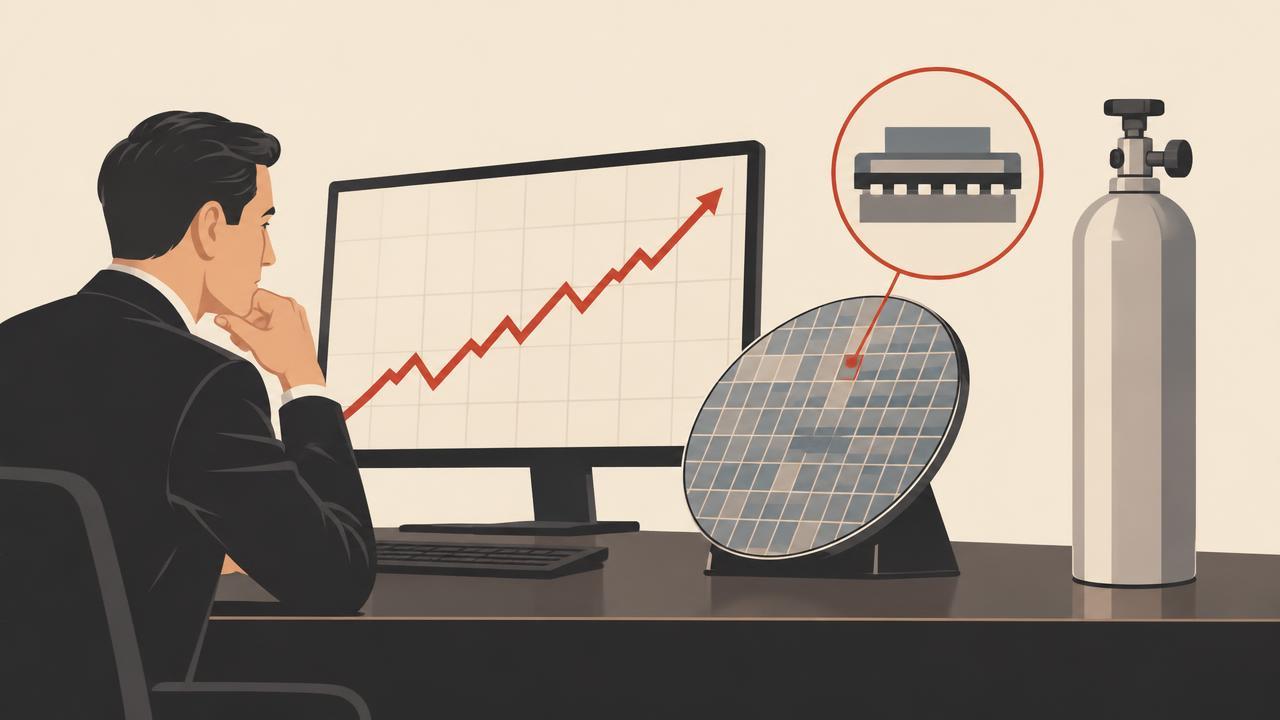
US equity benchmarks S&P 500 and Nasdaq reached new highs, led by heavy investment tied to artificial intelligence.
In this article · 5
The S&P 500 and Nasdaq both reached new record levels, with artificial intelligence (AI) developments cited as the primary driver. Market participants note that AI-related demand is strong enough that current geopolitical tensions — including events in the Middle East — have so far had only limited dampening effect on equity benchmarks.
Large capex and growing memory demand
Leading technology companies are planning very large capital expenditures this year, which the article states could reach as much as $725 billion in total, focusing on data centers, GPUs and networking equipment. Those investments are generating substantial additional orders for memory chips; the piece gives approximate planned investment figures for major firms:
- Amazon: about $200 billion
- Alphabet: $175–190 billion
- Microsoft: $145–190 billion
- Meta: $115–145 billion
At the same time DRAM prices have risen, and the memory-chip manufacturing sector has strengthened, as reflected in the PHLX Semiconductor index.
Winners among manufacturers and Apple’s quality concern
Within the semiconductor space, some manufacturers saw notable share gains: Intel rose about 9 percent and Samsung about 18 percent, movements attributed in part to expectations of orders tied to Apple. The article also notes a cautionary point from Apple: broadening the supplier base quickly could risk product quality if not managed carefully.
Helium supply and potential production risks
Although the United States is only minimally dependent on Middle Eastern oil according to the article, semiconductor producers rely on helium, and roughly 33 percent of global helium supply originates in the Middle East. The article reports no immediate shortage of helium at present; traditional nitrogen-based atmospheric products can be used to supplement supply, and manufacturers may blend more nitrogen into the helium atmospheres used in production. These technical adjustments are typically handled internally by the manufacturers.
Implications for markets
In the near term, AI-driven capital spending and rising memory demand continue to lift tech stocks and indices. However, the geopolitical exposure of helium supplies and higher oil prices — which can drive social discontent — represent background risks for production and costs. The piece also suggests that rising energy prices can create political pressure for quick fixes, a dynamic linked in the article to calls for swift action by Donald Trump.
Conclusion
AI investment is powering equity gains and strengthening the memory and semiconductor sectors, but supply-chain sensitivities such as helium sourcing and energy-price volatility remain watchpoints for investors and industry players.
Related articles More from the section.

SAP considers cutting more than 10,000 jobs amid AI shift
SAP is considering eliminating more than 10,000 positions as it adapts its business to artificial intelligence, according to Bloomberg.
Industry · November 26, 2026
OpenAI employee saw potential for mathematical applications of the model early on
An OpenAI employee referred to in the text as Ven believed early on that the company’s model at the time might be capable of solving the Millennium Prize Problems.
Industry · November 26, 2026
GTA VI and Anthropic IPO Highlight Debate Over AI and Creative Work
The reported launch of Grand Theft Auto VI has renewed debate over whether AI can replicate the painstaking work behind ambitious video games.
