AI-generated text
AI-driven single-cell analysis reveals genetic and proteomic heterogeneity in clear cell renal cell carcinoma
Research · August 17, 2026
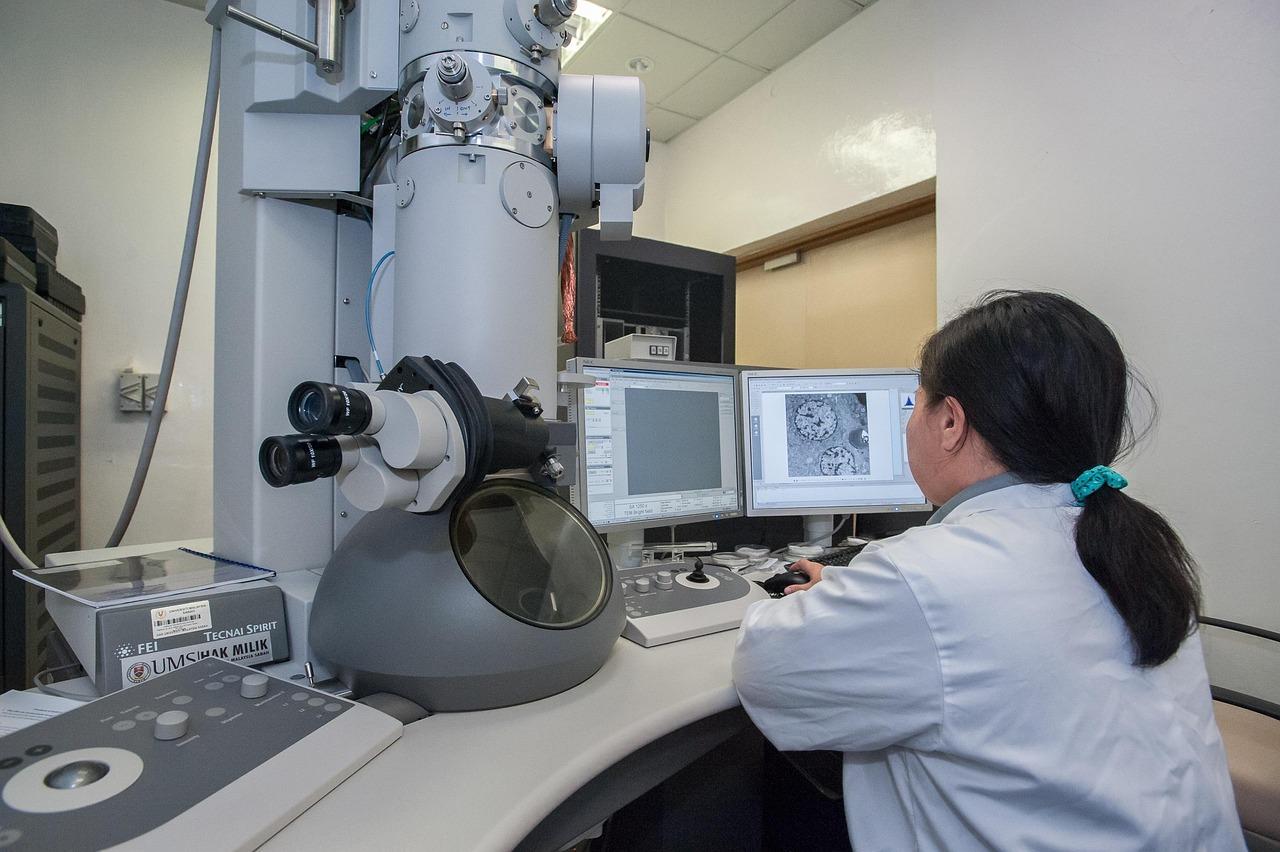
Researchers led by Horváth Péter’s Lendület Mikroszkópos Képelemzés és Gépi Tanulás Kutatócsoport used artificial intelligence and an automated single-cell facility to measure both gene activity and protein composition of tumor clones from clear cell renal cell carcinoma at single-cell resolution.
Researchers from the Lendület Mikroszkópos Képelemzés és Gépi Tanulás Kutatócsoport, led by Horváth Péter, have developed an approach that uses artificial intelligence (AI) to profile genetic and proteomic features of tumor clones from clear cell renal cell carcinoma at single-cell resolution. The work was reported in the journal Molecular Medicine.
Tumor heterogeneity and the diagnostic challenge
Malignant tumors are composed of multiple, functionally distinct cell populations. Even at diagnosis, some of these cells may have the capacity to seed metastases months or years later or to resist treatments. Conventional molecular assays often analyze bulk tissue and therefore can miss local differences between tumor regions. The presented approach aims to overcome that limitation by resolving cellular differences at single-cell level.
Automated single-cell infrastructure in Szeged
The technical backbone of the study is an automated single-cell research facility established by the Szeged research group. This system enables continuous, human-free isolation of cells that the AI identifies with high precision, followed by molecular analyses. The automation allows around-the-clock operation and improves scalability and reproducibility for targeted single-cell studies.
Deep Visual Proteomics and the methodological advance
The study builds on Deep Visual Proteomics: AI first analyzes histological images to identify important cell types or clusters, researchers then extract those regions with a focused laser beam, and subsequently determine the protein composition of the selected cells. Protein profiles provide direct insight into how tumor cells function, grow, adapt, or acquire resistance.
In this study the team extended the approach by complementing image-guided proteomic profiling with single-cell transcriptomic analysis. That is, for AI-selected tumor cell groups they measured not only proteomes but also which genes are active in the same cells. This dual readout allows examination of the same cell populations from the perspectives of gene activity and protein-level function.
Why this matters
Combining image-guided selection with both transcriptomic and proteomic single-cell measurements makes it possible to more precisely characterize biologically distinct cell groups within a tumor. This matters because a tumor cell’s aggressiveness is shaped by multiple concurrent processes — gene expression programs, protein activity, metabolism and interactions with the immune system — rather than a single factor. The new workflow helps identify which cellular subpopulations may drive metastasis or therapy resistance.
Outlook
The publication demonstrates the feasibility of the approach on samples of clear cell renal cell carcinoma. Applying this technology in further studies could improve mapping of intratumoral heterogeneity and support development of more targeted diagnostic and therapeutic strategies. The work highlights how combining AI-driven image analysis with automated single-cell isolation and parallel molecular profiling can provide deeper insights into tumor biology.
Related articles More from the section.

New Test Measures AI Model Performance on Long Engineering Tasks
A new study examines how AI model performance on long engineering tasks improves with the computing capacity used during testing.
Research · November 25, 2026
AI labs publish mathematical proof claims awaiting review
OpenAI and Anthropic have published AI-assisted claims on major problems in computational complexity, including the matrix multiplication exponent and the separation of VP from VNP.
Research · November 25, 2026
Register reuse speeds up NVFP4 attention on NVIDIA RTX Blackwell
A revised attention kernel reuses registers and interleaves operations to keep Tensor Cores busier on NVIDIA RTX Blackwell GPUs.
