AI-generated text
AI-driven output becomes invisible to economic statistics, warns research firm
Industry · June 4, 2026
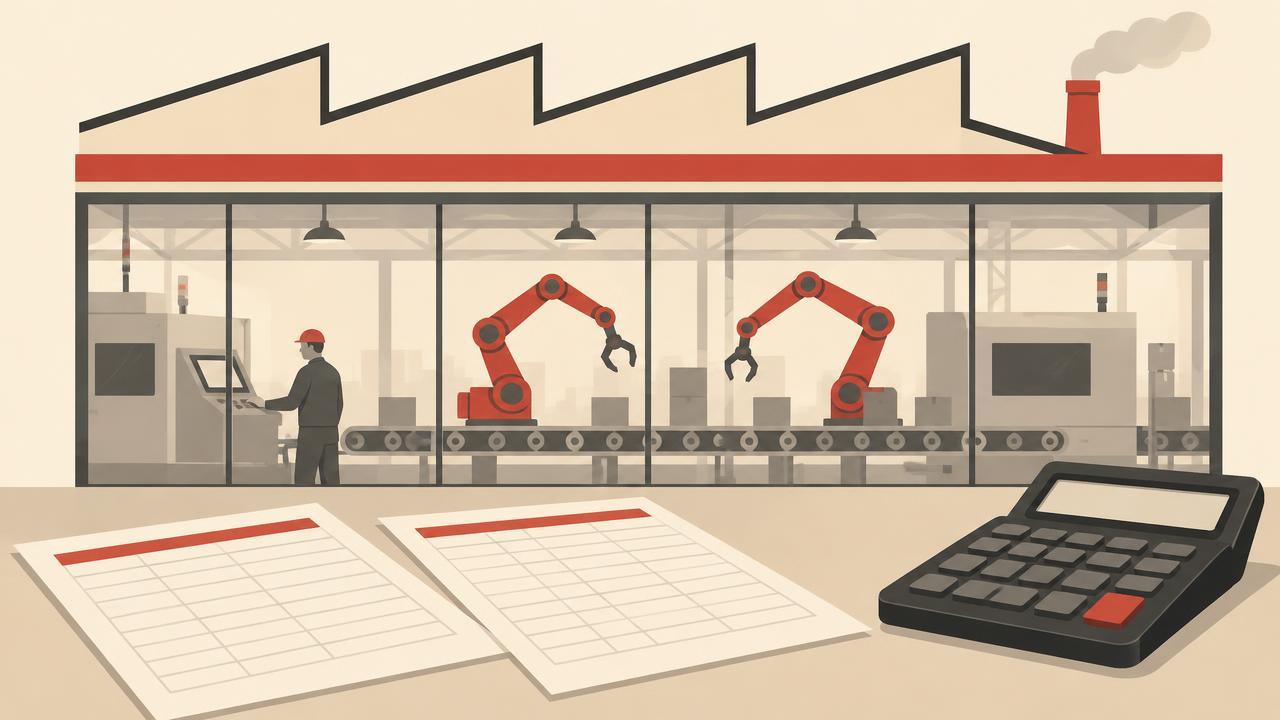
Research firm SemiAnalysis argues in its report "AI Dark Output" that AI-generated value is increasingly undetectable by traditional economic measures such as GDP, price indexes and employment data.
In this article · 4
SemiAnalysis, a research firm known for its chip- and compute-focused supply-chain analyses, argues in its report "AI Dark Output" that economic value generated by artificial intelligence is increasingly undetectable by conventional measures such as GDP, price indexes and employment statistics.
What is the structural problem?
The report points to a structural measurement issue: roughly 41 percent of U.S. services GDP — about $7.2 trillion — is measured through wages and hours worked. When AI doubles the productive output of a lawyer or other professional without changing headcount or pay, that productivity gain cannot be captured by statistics that rely on wages and hours.
SemiAnalysis estimates that about $1.5 trillion of wage-related tasks are already exposed to AI, meaning those activities are materially affected by automation and model-driven workflows.
How this shows up in practice
The report gives a concrete example: drafting a will historically cost around $150, while equivalent output delivered via AI APIs can cost $0.50 or less — a 99 percent price collapse. Because fewer traditional transactions occur and firms bill less, official revenue figures can decline; statisticians may interpret that as economic contraction rather than a price-driven efficiency gain.
The analysis also flags a policy risk: incoming Federal Reserve chair Kevin Warsh has acknowledged that he uses backward-looking indicators when setting rates. If these indicators are blind to AI-driven gains, policymakers risk misjudging the economy.
Why it matters
SemiAnalysis warns that the present situation could invert a familiar error: whereas past episodes produced falsely optimistic booms, a genuine AI-driven expansion today might read as a bust because measurement tools have gone dark. That misreading could lead policymakers to implement measures that unintentionally strangle a real technological revolution.
The report does not prescribe detailed statistical fixes in its public summary, but it underscores the need to modernize measurement frameworks to properly account for the rapid spread of AI and its impact on economic activity.
Summary
According to "AI Dark Output," parts of AI-generated value currently escape traditional economic statistics, potentially producing misleading signals about economic health and complicating policy decisions.
Related articles More from the section.

SAP considers cutting more than 10,000 jobs amid AI shift
SAP is considering eliminating more than 10,000 positions as it adapts its business to artificial intelligence, according to Bloomberg.
Industry · November 26, 2026
OpenAI employee saw potential for mathematical applications of the model early on
An OpenAI employee referred to in the text as Ven believed early on that the company’s model at the time might be capable of solving the Millennium Prize Problems.
Industry · November 26, 2026
GTA VI and Anthropic IPO Highlight Debate Over AI and Creative Work
The reported launch of Grand Theft Auto VI has renewed debate over whether AI can replicate the painstaking work behind ambitious video games.
